Wednesday, 11 October 2017

ULearn 2017 - Day 1: Future Focused Learning

Future focused learning - a design thinking workshop to prepare your school for the new digital technology curriculum

Presenter: Paula Hay (N4L), Zoe Timbrell (OMGTech), Kawana Wallace, Patrick Lalor, Vivian Chandra, Geoff Bentley, Wiremu Wallace

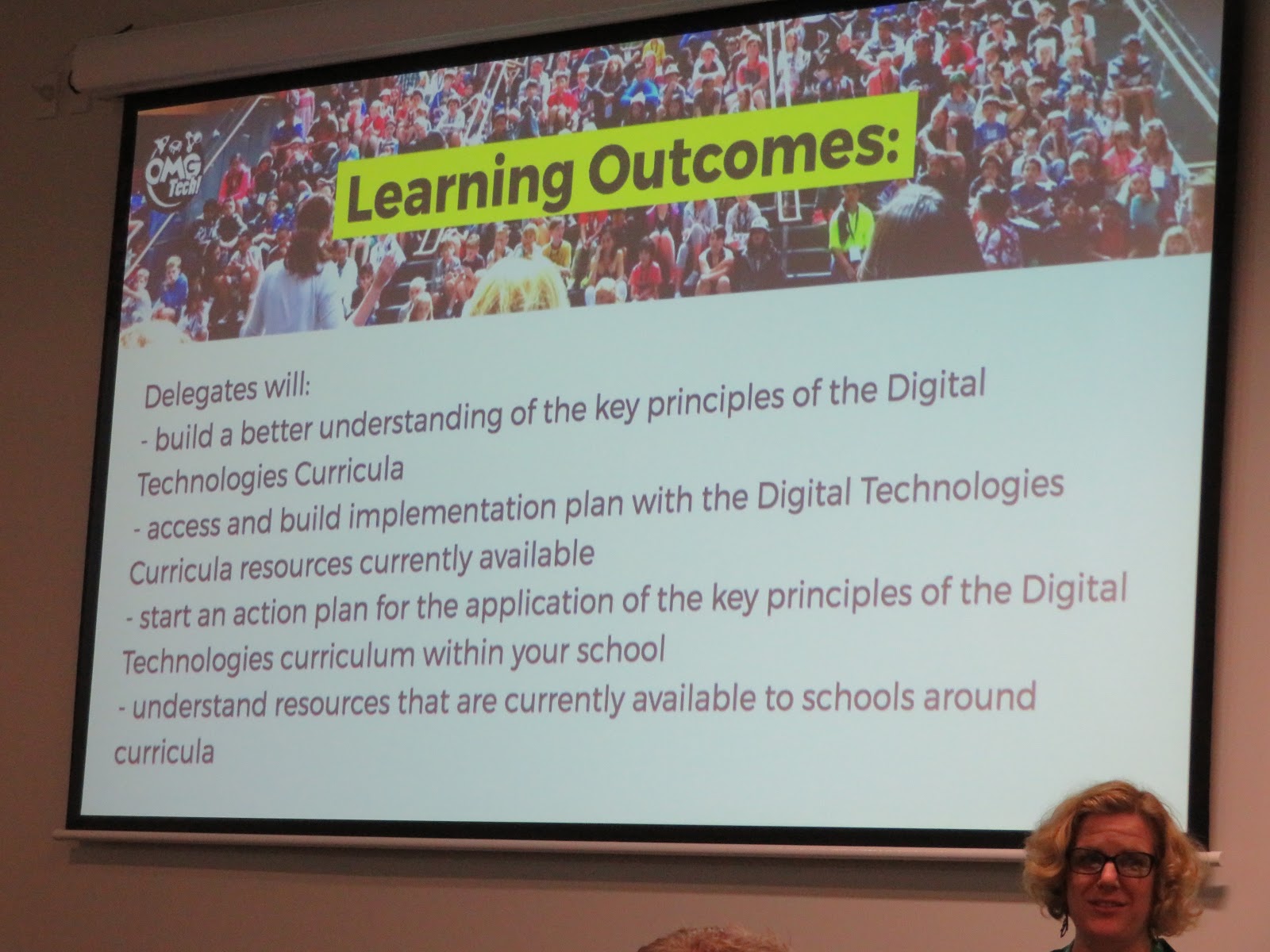
Learning Outcomes:

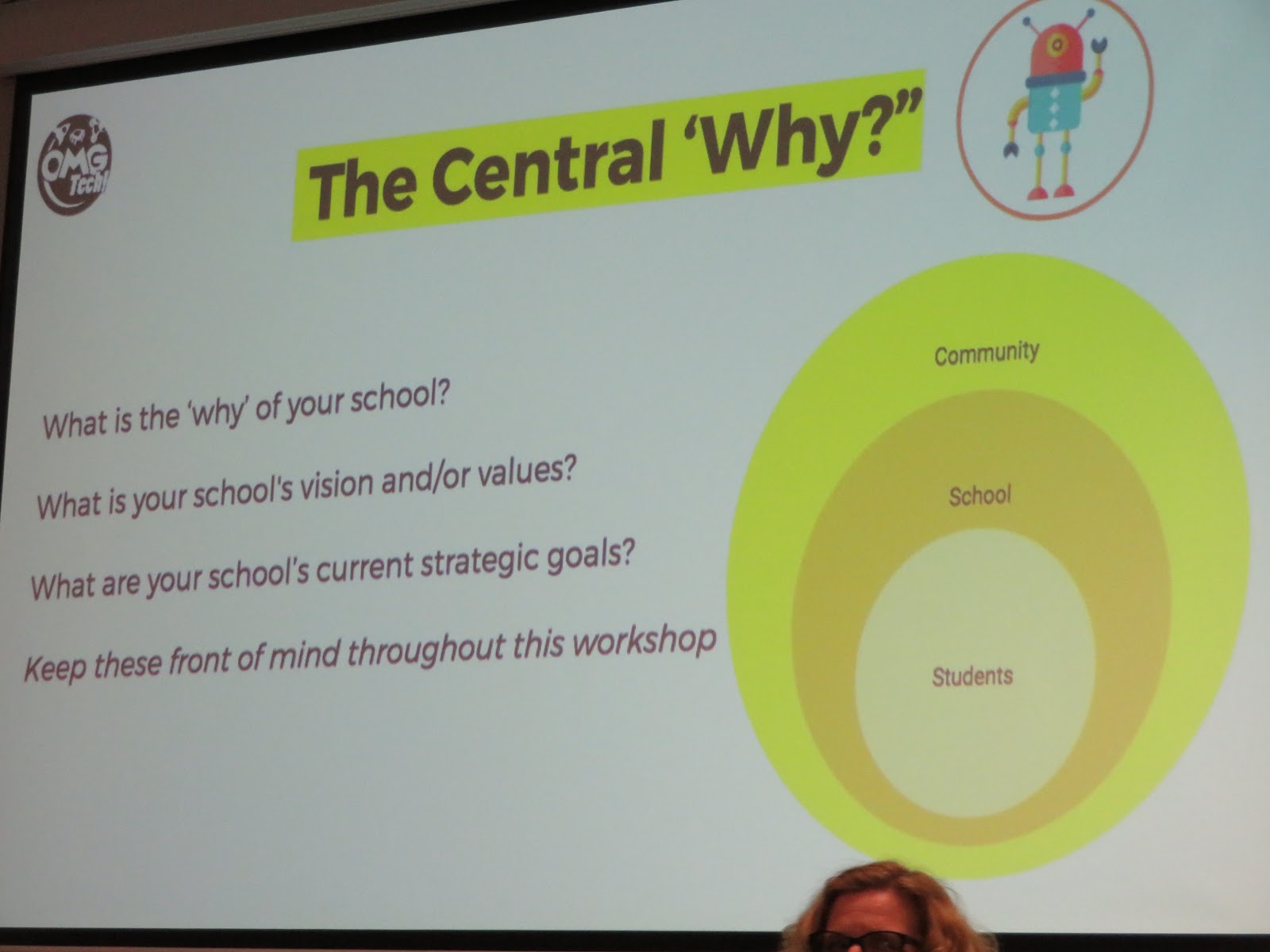
The Central ‘Why?’ - What is the ‘why’ of your school?

Computational thinking for digital Technologies:
Comp Thinking enables a student to express problems

3 main areas of focus for the new digital technology curriculum:
Algorithms
Programming
Computational Thinking

An Algorithm is the set of instructions created through logical thinking (a process or set of rules to be followed in calculations or other problem-solving operations, especially by a computer.)

Programme - when an algorithm goes into a computer (provide (a computer or other machine) with coded instructions for the automatic performance of a task)

Computational Thinking - the thought processes involved in formulating a problem and expressing its solution(s) in such a way that a computer—human or machine—can effectively carry out.

Students need to have a basic understanding of ‘binary’
(Binary describes a numbering scheme in which there are only two possible values for each digit: 0 and 1)

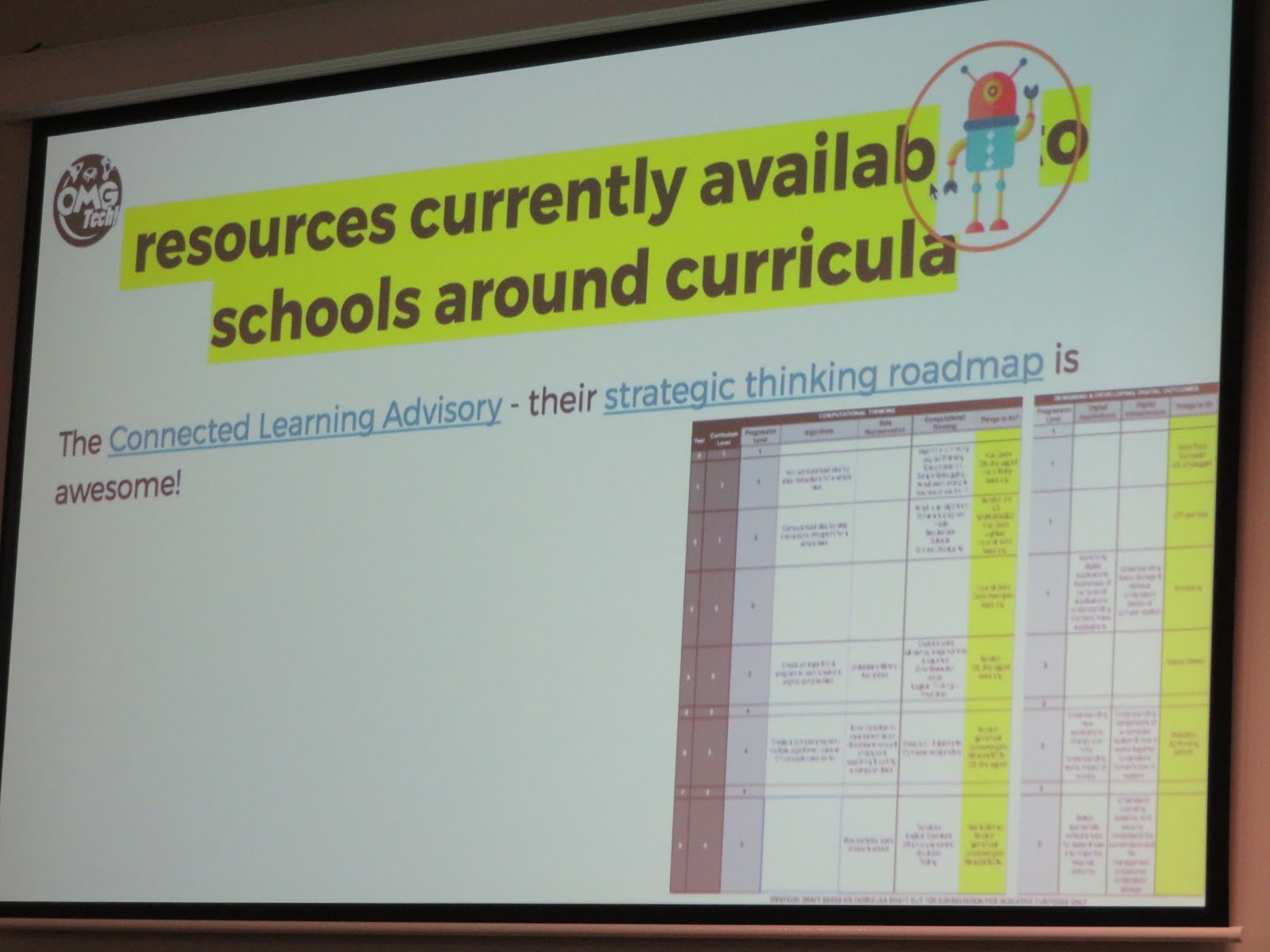
We were provided with a sheet with curriculum and progression levels - Year 0 to Year 8. Shows possible progressions and programmes to use.

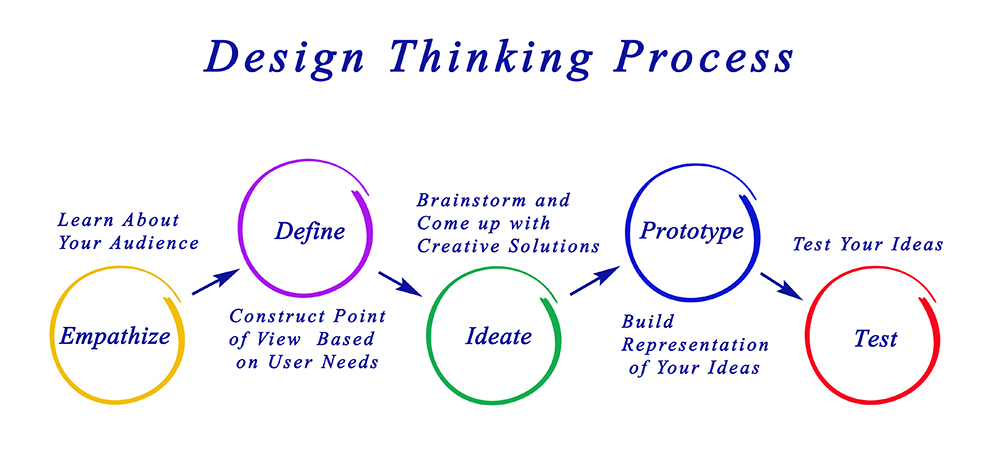
Design Thinking Process:
Empathise
Define - a problem well defined is a problem half solved
Ideate -
Prototype - try it out, what worked? What didn’t?
Test


ULearn 2017 - Day 1: Computational Thinking

Computational Thinking - Breakout 2


Integrating coding (computational thinking) into your classroom programme
Presenter: David Kinane


David has an amazing site that we could access to try out some of the things that he talked about - Computational Thinking


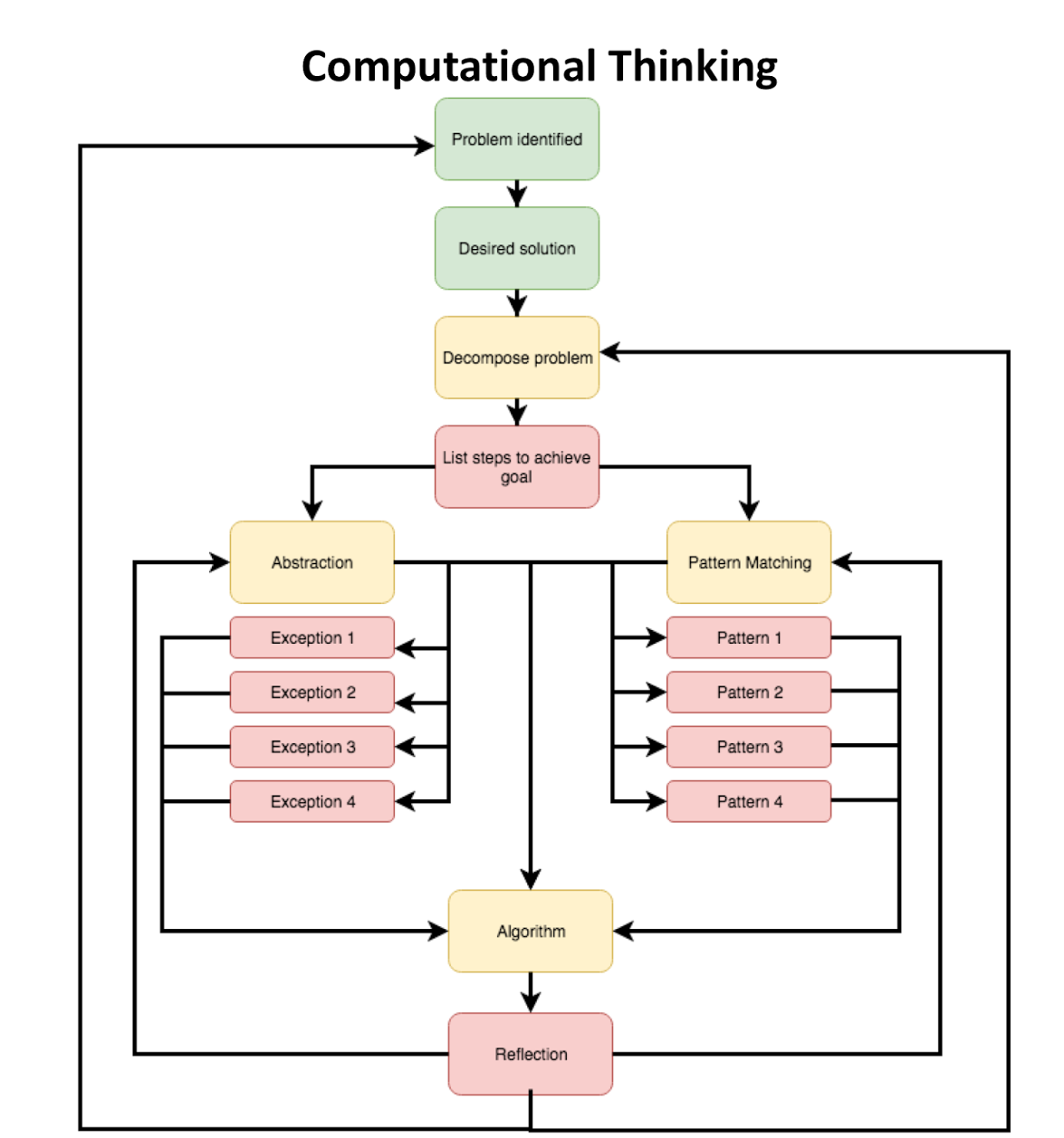
By using a programme e.g. Scratch, students will identify a problem, list steps to achieve a goal, pattern match, create an algorithm, then reflect.


Early years basics - useful for Junior teachers


3 main areas of Focus:
  1. Makey Makey using Scratch
  2. Arduino
  3. Drone

I was at a table which had the Makey Makey gear so I used it to create a mini keyboard using playdough. We have used Makey Makey and Scratch before in my Year 7 & 8 Extension class. I have no idea how to use the Arduino kit so will need to look more into this when I’m back at school. I didn’t get the chance to fly the drone, but I’m not too worried.

ULearn 2017 - Day 1: Augmented Reality

Augmented Reality - Melanie Langlotz


Break out 1: The presenter spent the first half of the session providing a range of examples of different AR apps. Then spent the second half talking about the Magical Parks app.


Augmented reality vs virtual reality


GEO A.R. Games


Virtual = 100% synthetic
Augmented = mixed world. Live video feed and on top = 2D video graphics
1960 = start of augmented reality via TV live feeds


Education:
Fire NZ - VR get out of the house


Diff types of AR - 1. image recognition


Aurasma app -
Can make card/vocab come alive, select a character
Hold tablet/phone over card. For better tracking of image/word can add a border with dots.


2. Tracking


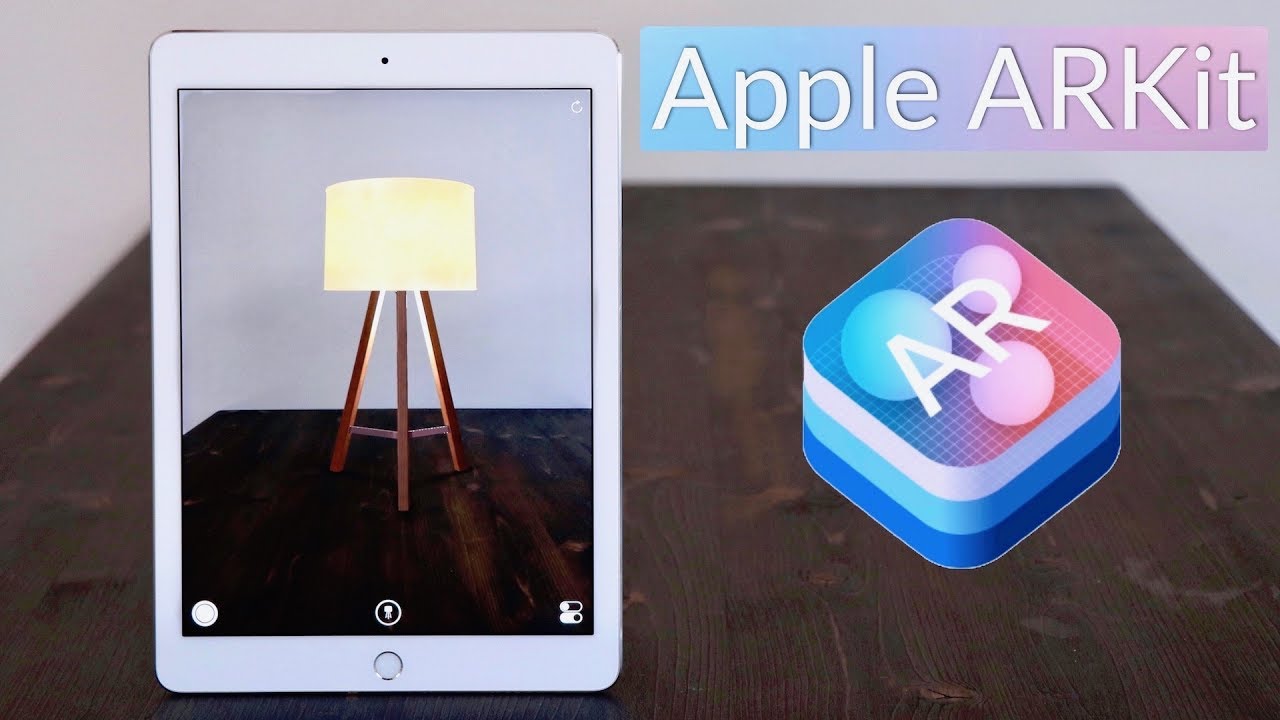
AR kit   

Placing an animated object into a real world environment (tracking) only available in latest IOS phones, can use ipad 2012


3. Geospatial e.g. Pokemon Go (combines augmented reality with GPS)


Blurring lines between reality and augmented reality


Mobile devices and hardware sensors make a difference


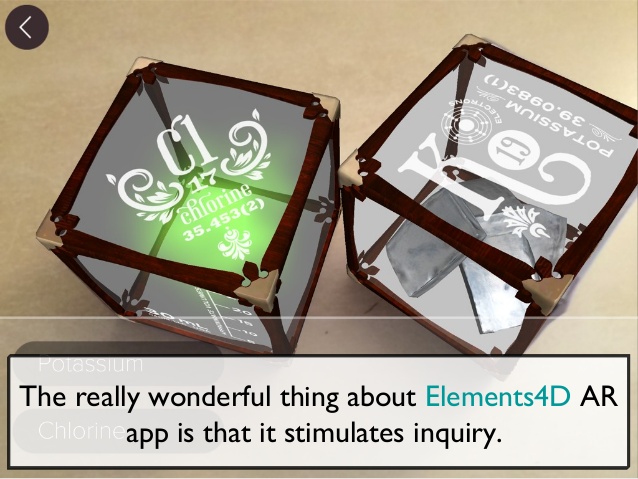
Elements 4D app


Apple ArKit augmented reality - Minecraft


Mixing real world/environment and minecraft.


Human brain tends to remember 90% of what it does or stimulates


Microsoft HoloLens - holographic computer that you wear ($3,000)


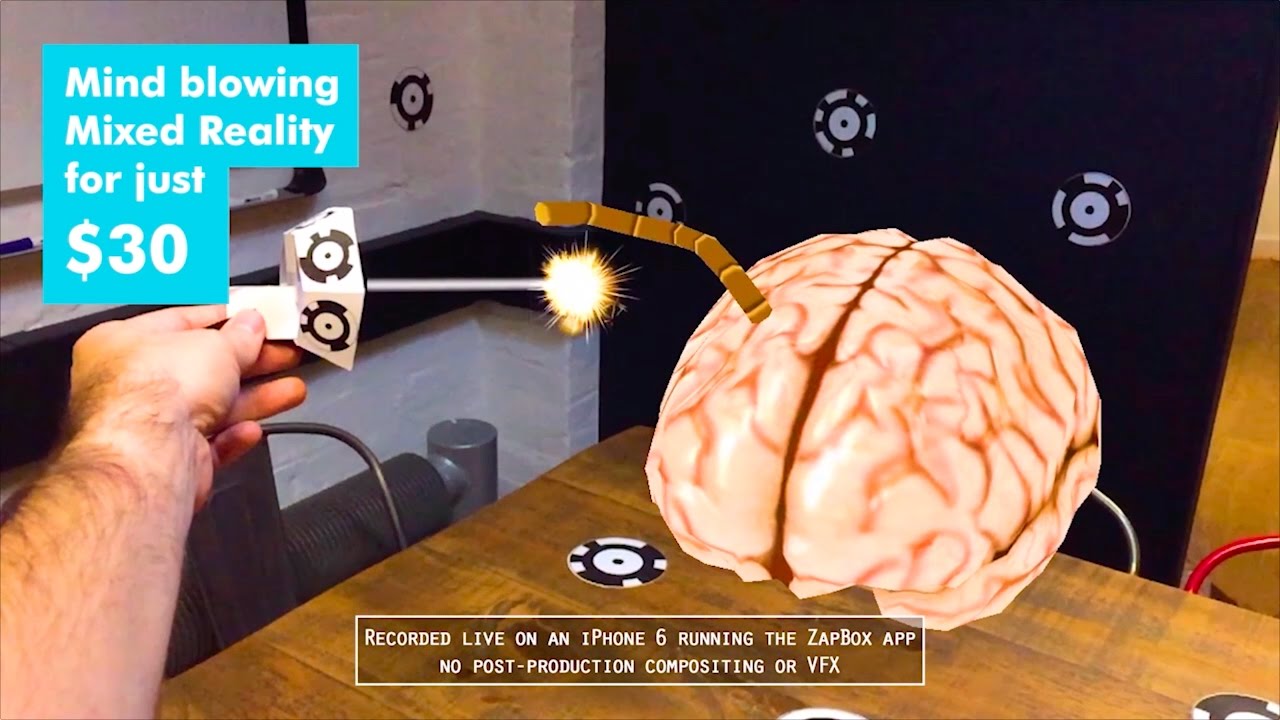
ZapBox - uses mobile devices - mixed reality (MR)
Put point codes around environment - scan, use headset


Quiver -


Magical Park - digital park. Melanie Langlotz CEO of this app. Encouraging students to go outside more.
4 different worlds
Team missions
Ethical gaming - no ads, purchases etc, free to play
Partnership between MP and schools
Different uses for MP in schools e.g. reward, PE, motivation to read, game design, connect older and younger students
Offering a free 2month trial for schools


Next step - getting kids to build their own worlds and design their own games.


What’s the Plan Stan? - Auckland Civil Defence - Teach kids the 6 impact strategies


Disaster scenarios - kids are encouraged to collect items needed
Games will be ready in April 2018


CoSpaces - Stonefields School uses this


ULearn 2017 - Day 1: Keynote Speaker Eric Mazur

Eric Mazur - Ulearn 17


This was our first Keynote speaker for ULearn 2017. He is a physicist and educator at Harvard University. He began lecturing 30 years ago, before computers. He noticed that not much had changed in the way students were taught over hundreds of years. The lecturer or teacher stood at the front and students took notes.
Knowledge is something that needs to be constructed in the brain of the learner - not transmission
Mazur used to hand out notes after class to ensure that students stayed. He questions whether education is merely the transfer of information? Students tend to be passive observers, there was a lot of rote memorising, but students did not make sense of underlying material
Talked about thinking of education as a 2 step process. There needed to be an opportunity for students to assimilate information
  1. Transfer of information (in class)
  2. Assimilation of that information (out of class) - teachers should focus on this!
Teach by questioning rather than by telling - first taught by Socrates
Mazur talks about a particular lesson involving Newtons law of physics/motion etc. students were confused so Mazur told students to talk to each other to figure it out.
Students can explain something better to another student/beginning learner because its so clear in their mind - can still remember difficulties in learning it


  1. Question
  2. Think
  3. Poll (what students think, first choice)
  4. Discuss (peer discussion)
  5. Repoll (2nd answer)
  6. Explain (teacher to explain why)
  7. (then cycle repeats)


Students are asked to try and convince other students to listen to what they think
Active class - students cannot be passive, teacher doesn’t have to wait until assessment. Good for students to see where they sit in comparison to the class.
Personalises the learning because students can help each other
Thermal expansion - why do solids expand? Atoms get further away when it gets hotter
Question posed about rectangle metal plate with a circular hole in it. If heated what will happen? We made a choice then talked about it. (increase, same, decrease)
Question asked by teacher
  1. You made a commitment
  2. You externalised your answer
  3. You moved from the answer/fact to reasoning
  4. You became emotionally invested in the learning process


Peer Instruction
= higher learning gains
= better retention
How to effectively transfer information outside of the classroom?
Students need time in class to think
Need time to absorb and think about information
Problems with just video only approach is that students tend to fast forward, attention wanes


Reading - transfer pace set by reader, viewer active
Brain is more active when reading rather than watching videos
Education is a social experience
Wants:
Every student prepared for every class
Solution:
Turn out of class component also into a social interaction


‘Perusall’ - social learning platform. Talks about the Perusall app - great way to engage students. Students are encouraged to read and ask questions. Teacher can view students questions and see where areas of confusion are.
Collaborative process - students can type in questions and other students can type in responses to question
Use combination of intrinsic and extrinsic learning
Rubric based assessment
Monday, 2 October 2017

Coding Summer Camp 2018

I am very excited to announce that I have been accepted into the Apple 'Women Leading Learning: Coding Summer Camp' which will be held in Sydney in January next year. I will join a group of around 50 women from Australia and NZ to take part in a three day workshop learning how to use Swift Playgrounds to teach coding to students. Awesome!


Friday, 22 September 2017

3rd Paideia Seminar Reflection

On Tuesday the Year 5 & 6 Extension students had their third Paideia Seminar for the year. The provocative statement was: ‘Is being civilised such a good thing?’ The statement was kept quite general and broad so that the students had the opportunity to take their thinking in many different directions. One of the discussions was about the idea that the advancement of technology was actually the cause of many of the problems that society now faces. Another was about the possibility of living on another planet.

The seminar provided opportunities for students to talk about the school wide theme: Guardians of the Galaxy. They have been learning about space exploration and the basic elements necessary for life e.g. soil, sun and water. In extension class they have been exploring the possibility that humans may need to physically adapt to survive on other planets.

Once again tokens (lollies) were provided on each table to encourage our speakers to participate and also remind them that they need to share an idea at least three times. Our less confident speakers were given cue cards to prompt them. Their names were also put onto the whiteboard and ticks were put next to their names after each time they spoke.

The idea was that this was going to be a collaboration and that students would participate equally and fairly. Less confident students were supposed to be encouraged to share. However things didn’t quite work out as planned. The same students tended to dominate much of the conversation and had to be asked to wait for others to speak first towards the end of the seminar. One of our less confident students declined the offer to speak and share an idea at one stage which was disappointing. Students also had to be reminded to connect with other ideas that were shared or to piggyback and acknowledge what was previously said.

The highlight was that a student who had been very reluctant to share ideas in the last two seminars was surprisingly one of the students who tended to dominate talk time during this seminar.

Next steps:
  1. Continue to encourage the less confident students to participate more often. Next time these students might need some written statements handy to read out during discussions just to practice speaking in front of their peers in this type of situation more often.
  2. The more dominant speakers may need cue cards to remind them what they can do to support others who have not participated enough.
  3. Keep providing practice conversations/scenarios for students to practice piggybacking off the ideas of others, to extend their explanations and to think more deeply about what they are saying.

Monday, 28 August 2017

Manaiakalani Hui 2017

Last week on Friday the annual Manaiakalani Hui took place at the Panmure Yacht club. A student representative from each of our Manaiakalani cluster of schools in Auckland presented examples of their learning. The students were well spoken and represented their schools very well. In particular I enjoyed the presentation about the issue of disability parking from Somerville School.


Next the SPARK MIT teachers spoke about their inquiries. I spoke about the use of the Paideia method of learning and Paideia Seminars to improve critical thinking skills for learners in the Year 5 & 6 Extension group. I felt well prepared for my presentation as I had good evidence (video footage etc) to back up my statements and results. So far, 10 out of 18 students have made a shift/improvement in their critical thinking skills. I used SOLO (Structure of Observed Learning Outcomes) as a framework for showing shift in thinking.

I also enjoyed listening to my fellow SPARK MIT group deliver their presentations. Teachers from Tamaki College shared how they could make a difference in student learning through blogging and by using visible learning and teaching sites.