Showing posts with label Manaiakalani. Show all posts

Friday, 15 November 2024

Bursts and Bubbles Presentation

 This year the Bursts and Bubbles event was held at Panmure Bridge School. All COL members were required to present a 3 minute presentation about their inquiry. The following was my presentation: 


I teach in a Year 7 & 8 class in Team 5 at Pt England school. My inquiry this year was focused on student engagement, vocabulary and extended discussion to help raise student achievement in reading.

I identified this as my focus when I noticed that many students struggled to stay on task during independent work time in literacy class. Many students lacked the ability to share their ideas clearly during group discussions. There was a lack of precise words and vocabulary being used in e-asTTle writing samples. Probe reading data also showed that the lack of student vocabulary knowledge was an issue.

To build a rich picture of my students’ learning I used PAT reading data, STAR Test data, running records, observations and surveys to gather information.

The main patterns of student learning I identified in the profiling phase were that the students in my target group were reading between 8 to 9 years old. Most performed below or well below in the PAT reading, STAR and e-asTTle writing tests.

My profiling of my own teaching showed that I had strengths in planning for learning and in teaching writing skills. However, my students would likely make more progress if I focused on improving student engagement overall and provided more opportunities for extended discussion.

The changes I made in my teaching were:
  • That students set weekly goals based around one aspect of their learning or behaviour. Surveys were completed each week to reflect on these goals.
  • The seating arrangement was changed in an effort to maximise learning time and minimise distractions.
  • More opportunities were provided to scaffold and support vocabulary development. I used literacy activities from the RPI workshops to help build student knowledge of a range of vocabulary and tier 2 words.
  • Extended discussions were implemented more effectively during guided reading sessions.
The literature or expertise that helped me decide what changes to make was based around research from Woolf Fisher, peer reviewed literature based around student engagement, extended discussion, the RPI workshops and several Ministry of Education documents.

The easiest thing for me to change was the classroom layout and seating arrangements. The benefits were instant.

The hardest thing for me to change was how to provide effective strategies to support students with behavioural challenges, to help them follow through on their goals, and to achieve greater independence and self-efficacy.

Some changes I made along the way were to:
  • Make extended discussion more enjoyable for students by gamifying extended discussions
  • Use an online programme called Vosaic to download videos of extended discussion sessions. Videos were analysed using tools on Vosaic to help identify key areas that worked well, in order to identify teaching strengths and weaknesses.
Overall I would rate the changes in student learning as moderate for some, and significant for others. The evidence for my rating is that out of 14 students in my target group, half had made significant improvements in their PAT reading score in Term 4 compared to Term 1.

The most important learning I made about student engagement was that it’s so important to know who your students are and how they learn best, and to be more mindful of what I do as a teacher that makes a difference.

The most important learning I made about my inquiry was realising the importance of constantly making changes or tweaks to keep improving my teaching practice. A learning that would be relevant to other teachers is that using an online tool like Vosaic would make analysing data easier.

Thank you.


Monday, 17 June 2024

COL: Data Collection - Observations and Surveys

Once I had identified my line of inquiry for my target group in reading, I went about collecting more data. Data was collected via observations and surveys. 

Observations: I continued to make observations of student behaviour and engagement in class towards their learning and towards others. In order to get a better picture of what was happening in terms of student engagement in class, I recorded 3 videos during literacy. They were each about an hour in length. I quickly skimmed through the video footage and made notes about how often students were on task during literacy class when they were not with the teacher for guided reading. I was not surprised to find that many students were busy talking to their friends or looking away from their chromebook, which meant that their literacy tasks were not getting done. This gave me an idea about which students needed to sit away from other students. It was interesting to notice that some of the quieter girls in class, who often went under the radar, were wasting quite a bit of learning time.


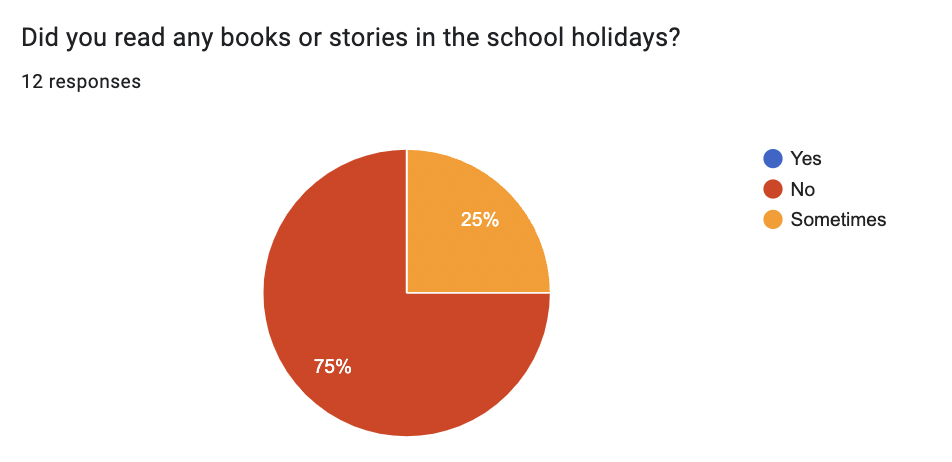
Surveys: I created a survey for my students in order to capture some of their feelings and attitudes towards reading and attending literacy class. I discovered that 66% of students did not read at home, and for the other 44%, it was their mother that usually listened to them read and not their father. Many of them did not spend any time reading at home for a variety of reasons. Some of the reasons included not having any books at home, spending time gaming, being busy with their family or being too tired. 75% of students did not read any books during the school holidays. 


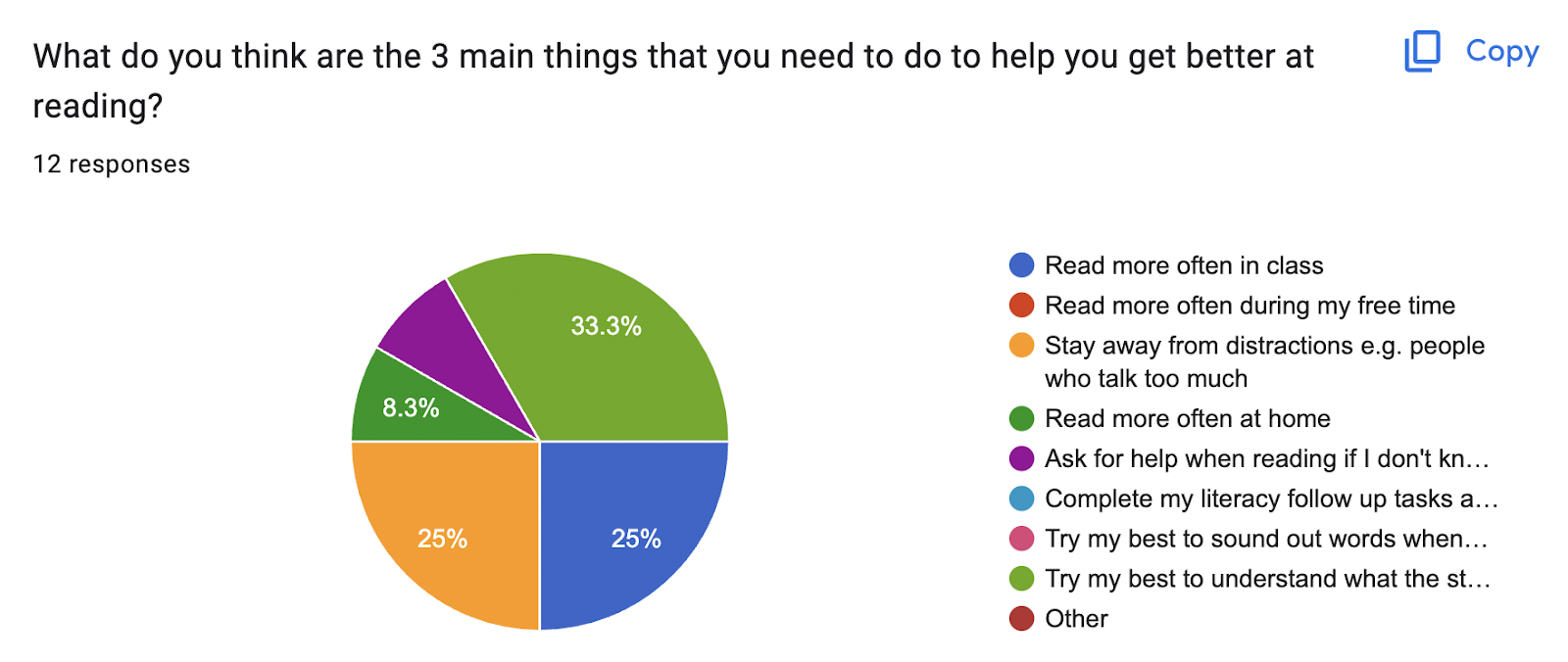
When students were asked what they thought the 3 main things were that they needed to do to help them get better at reading, none of them chose the option to ‘read more often during my free time.’ The three top responses were to: 


  • Try their best to understand what the story was about

  • Read more often in class

  • Stay away from distractions (e.g. people who talk too much)


Monday, 20 May 2024

COL: Inquiry Focus

 I have decided to focus on 3 key areas in my literacy programme for my COL Inquiry:

  1. Student Engagement

  2. Vocabulary Building

  3. Extended Discussion


This was based on my data, observations, surveys, hunches and the needs of the target students in my literacy class. It was also based around a need in Team 5 (Year 7 & 8) that was identified and addressed by our Team Leader, Mr Wiseman. 


Why?


Student Engagement: I noticed that this was a big issue during literacy lessons. Students appeared to be engaged in their learning most of the time when they were in a guided reading group session with the teacher. However, I noticed that many students were off-task or quite noisy when they had to work independently. For many students, tasks were not being completed on time.


Vocabulary: I noticed that students often lacked an understanding of unfamiliar or challenging vocabulary when asked for the meaning of the word during a running record or PROBE test. The use of a range of precise words was also often lacking in e-AsTTle writing samples. Analysis of data collected from STAR Tests also identified vocabulary as an area that needed attention. 


Extended Discussion: This has been a focus for Manaiakalani for a while now. It is an area of focus in Team 5 this year. I made an attempt to introduce and implement extended discussion sessions as part of my literacy programme earlier in the year, however, I know that I have not done it justice. Extended discussion provides an opportunity for students to develop their critical thinking, communication, listening and oral language skills. 


Tuesday, 7 May 2024

COL - Responses to my Hunches

During one of our COL meetings, we were asked to share our hunches with our colleagues and take note of some of the feedback provided. I also added some of my findings and thoughts regarding my hunches.

Hunch One: If I find or create texts to help older students who struggle with reading, it will motivate them to read more

It is difficult to find texts suitable for older students who struggle with reading. Some of the online websites that do provide texts that may be suitable require a subscription and fee. I tried to find free online reading programmes that are suitable for older students, but they cost money (e.g. Reading Doctor online, Story Shares, High Noon books etc). Instead I will utilise free access at school to Literacy Planet which has good reviews and Read Theory (another free online reading programme). Possibly try some comic books and other types of genres that are of high interest.

Hunch Two: If I create an interesting literacy programme/activities, then it will keep students motivated and on task when they are not with me

When students are easily distracted it is hard for them to stay on task. I may need to provide rewards or ask the students what they want to learn about. I need to provide opportunities for more ‘choice’ for students. What will this look like? How to keep them motivated and engaged? Look at the literature around student engagement. Review the current literacy programme and make changes e.g. class layout, and decide who sits with who.

Hunch Three: If I can find a way to motivate students, then they will read more often (mileage)

I need to ask the students what motivates them to read. I need to find ways to encourage more reading mileage e.g. buddy reading or rewards. Other ways could include involving parents, creating an attractive reading corner, sending books home to read etc.

Hunch Four: If I can focus on improving behavioural and cognitive engagement, my students will improve their ability to focus and improve their reading skills.

I need to identify exactly how many students are off task or focused and how often. I need to identify which students are able to articulate their thinking. Strategies are needed to focus on improving student engagement in class. Strategies are also needed to improve student’s higher order thinking skills and communication skills.

Tuesday, 30 April 2024

COL - Developing a Hunch

Here were some of the issues that I had identified with my literacy class through surveys and observations:

1. Students were wasting a lot of class time when they were not with the teacher
2. There was not enough reading mileage happening for students
3. The reading programme needed to be used more effectively to enhance writing
4. Students needed strategies to deal with distractions
5. It was difficult to find suitable texts to motivate older students who struggled with reading

An important stage when undertaking an inquiry is developing a hunch. The idea is that a hypothesis is a tentative answer to our research question that has not yet been tested.

How to formulate? The simplest way is to use this form: if...then…
For example: “If I encourage my students to write for real reasons, then they will be motivated to write.”

Before arriving at our next COL meeting we had to generate at least 3 hunches to share with our colleagues.

Hunch One: If I find or create texts to help older students who struggle with reading, it will motivate them to read more

I find that it is not very engaging or interesting for older students to read books targeted for younger readers. Unfortunately, when older students are well behind with their reading levels, then generally the texts are quite basic and do not really appeal to older students.

Hunch Two: If I create an interesting literacy programme/activities, then it will keep students motivated and on task when they are not with me

I have noticed that when students are with me during guided reading sessions, most are quite engaged and focused on reading. However, I have noticed that many of the other students in the class tend to be off task and do not complete enough of their learning tasks on time.

Hunch Three: If I can find a way to motivate students, then they will read more often (mileage)

One of the results from the student survey showed that students were not spending enough time reading. Much of the focused reading for students seemed to occur during guided reading sessions with the teacher.

Hunch Four: If I can focus on improving behavioural and cognitive engagement, my students will improve their ability to focus and improve their reading skills.

Student engagement is a big issue in my classroom, especially among many of the boys in my class. I think that if they were provided with strategies to improve their levels of engagement, then it will help them to stay more focused in class.


Monday, 22 April 2024

COL - Profiling

A crucial first step in any inquiry is understanding students' individual learning strengths and needs. This process, often referred to as profiling, helps to tailor instruction effectively. Effective profiling was discussed during one of our Manaiakalani COL sessions. Our principal Russell Burt talked about using EdPotential which is available to all teachers in Manaiakalani. This is an effective resource which is used to track student learning, whether individually, in classrooms or across schools in our cluster. 

To gain insights into my students' literacy abilities and requirements, I employed the following strategies:

1) Spent time during Term 1 getting to know my students e.g. through discussion and via tasks e.g. writing (‘All About Me’) and personal mihi and pepeha.

2) Gathering data and information from their 2023 and Term 1 2024 results e.g. PAT Reading and STAR data, Running Records or Probe.

3) Collecting data from EdPotential - tracking achievement for individual students in reading, writing and maths - to get a sense of their overall performance in these areas.

4) Student survey in reading - to gain insights into their reading habits, interests and strengths in reading.

Thursday, 11 April 2024

COL - Analysing STAR data

 After analysing the results from my students Term 1 STAR Tests, I have noted down some of the key areas that I need to work on when planning for literacy in Term 2.

Teaching and Planning Strategies:

  • Vocabulary:
    • Varied activities (image matching, writing definitions) based on reading and topics.
    • Build a word wall and hold regular quizzes (e.g., Kahoot!)
  • Sentence Comprehension:
    • Focus on inference, vocabulary, and diverse texts.
    • Practice cloze activities, multiple choice, and writing for mechanics (e.g. proper grammar and punctuation) and clarity (e.g. sentence structure to ensure their writing is easy to understand).
  • Paragraph Comprehension:
    • Teach strategies: skimming, summarising, identifying key words, and testing logical flow.
  • Vocabulary Expansion:
    • Explore synonyms, antonyms, and word families.
  • Decoding Advertising:
    • Discuss persuasive language techniques used to influence consumers.
  • Writing for Audience:
    • Analyze titles, identify audience, and understand formal/informal styles through diverse writing exercises (fairy tales, news, job applications etc.).

Thursday, 29 February 2024

COL - School Leaders Discussion

I initially decided to focus on tracking only one reading group for my COL inquiry. There are eight students in this group who are all reading at 9 years old. However, after some discussion with our Acting Principal Toni Nua regarding the recent Reading PAT and STAR test results, I will now focus on two of my reading groups. The second group are reading between 8 and 8.5 years old.

In total, there will be 16 students in my target group for my inquiry. This will allow for a larger sample size for my inquiry and hopefully better data collection. The discussion with Toni Nua was very valuable as she has a great wealth of knowledge and experience around teaching Year 7 & 8 students (She was the Intermediate School Team Leader years ago) as well as expertise in the literacy curriculum.

The next step will be to analyse the data from the PAT Reading and STAR test to identify where the student strengths and weaknesses are.


Monday, 26 February 2024

COL Data: PAT Reading and STAR Results Term 1 2024


PAT and STAR results: 

I used a table to track the PAT Reading and STAR data for 16 students who are in my potential target group for my COL inquiry this year. I initially thought about just tracking one reading group (around 8 students) but after discussion with Toni Nua (Deputy Principal) I will be tracking 2 reading groups who are reading at a similar age. 


Some Key findings: 

* The results from the 8-8.5 readers were quite similar to the 9 year readers. 

* PAT Reading range: Stanine 1 - 4

* STAR range: Stanine 1 - 3

* Word Recognition in the STAR test was a strength compared to the other sections. 

* Student weakness in STAR was: Vocab, Advertising language and Writing Style.

Tuesday, 12 September 2023

Manaiakalani RPI Day 9: Sharing (Final RPI Session)

 Today's session was the final RPI (Reading Practice Intensive) session for the year. The focus was on ‘Sharing’. Throughout the past 9 sessions we have received multiple opportunities to enhance our practice when it comes to planning, creating and delivering a robust, interesting and multi-layered reading programme for our students. Naomi, Georgie, Toni and Vicki have been amazing at walking us through the RPI sessions which have been pretty intense at times.

In regards to the focus on ‘Sharing’, we were reminded about the importance of student voice and how student blogs were a platform where students could share evidence of their learning, and share their authentic voice. Student blogs capture a record of student learning over time and is a great way for whanau to see and connect with what their children are learning at school.


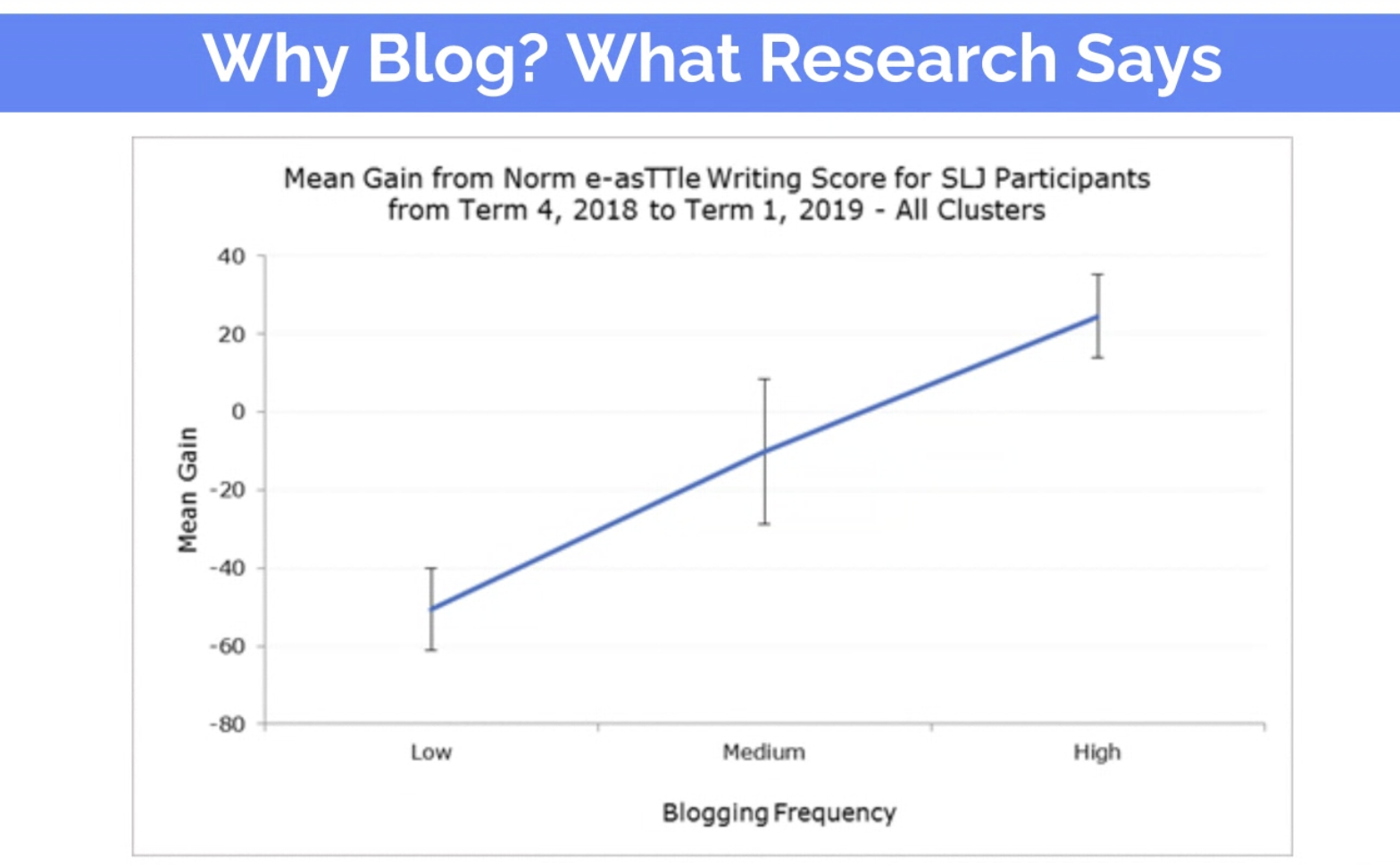
Research also found that blogging frequency impacts on student learning. So this is something to keep in mind when encouraging students to post their learning on their blog. In our team of year 5 & 6 learners, one of our teachers (Ms Parrant) creates a holiday blogging programme for our students. We will be encouraging as many students as we can to continue blogging throughout the next holidays.


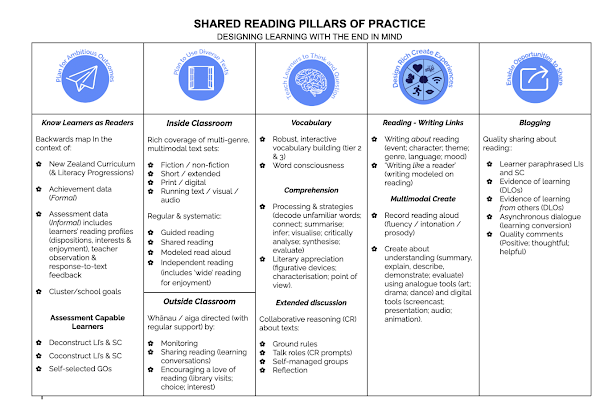
Once again we were reminded that we needed to design learning with the end in mind. This includes planning for ambitious outcomes, planning to use diverse texts, teaching learners to think critically and designing rich ‘Create’ experiences.

We reflected on how feedback needed to be useful and practical for students and how we needed to plan time for this to happen regularly. Regular feedback to children is important. As teachers we need to organise a system to do this, so that it’s useful for our students but does not create too much extra work for teachers. Upon reflection, I provide lots of oral feedback (usually on the spot)  for students and need to work on providing more written feedback on student work or on their blogs.


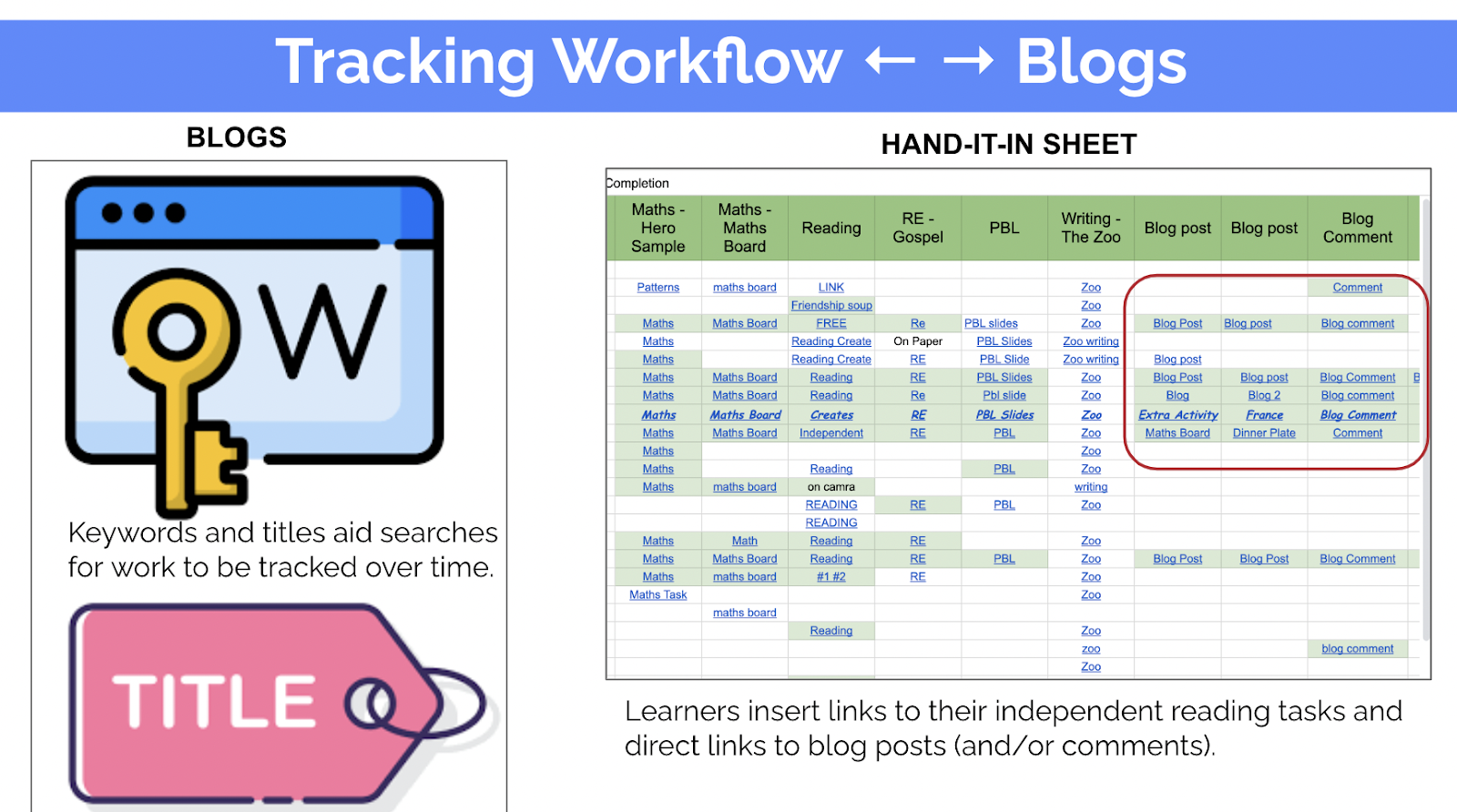
Tracking student workflow is something that I need to improve. I often have a spreadsheet where students can add the link to their learning tasks, but I have not always been consistent with monitoring this.


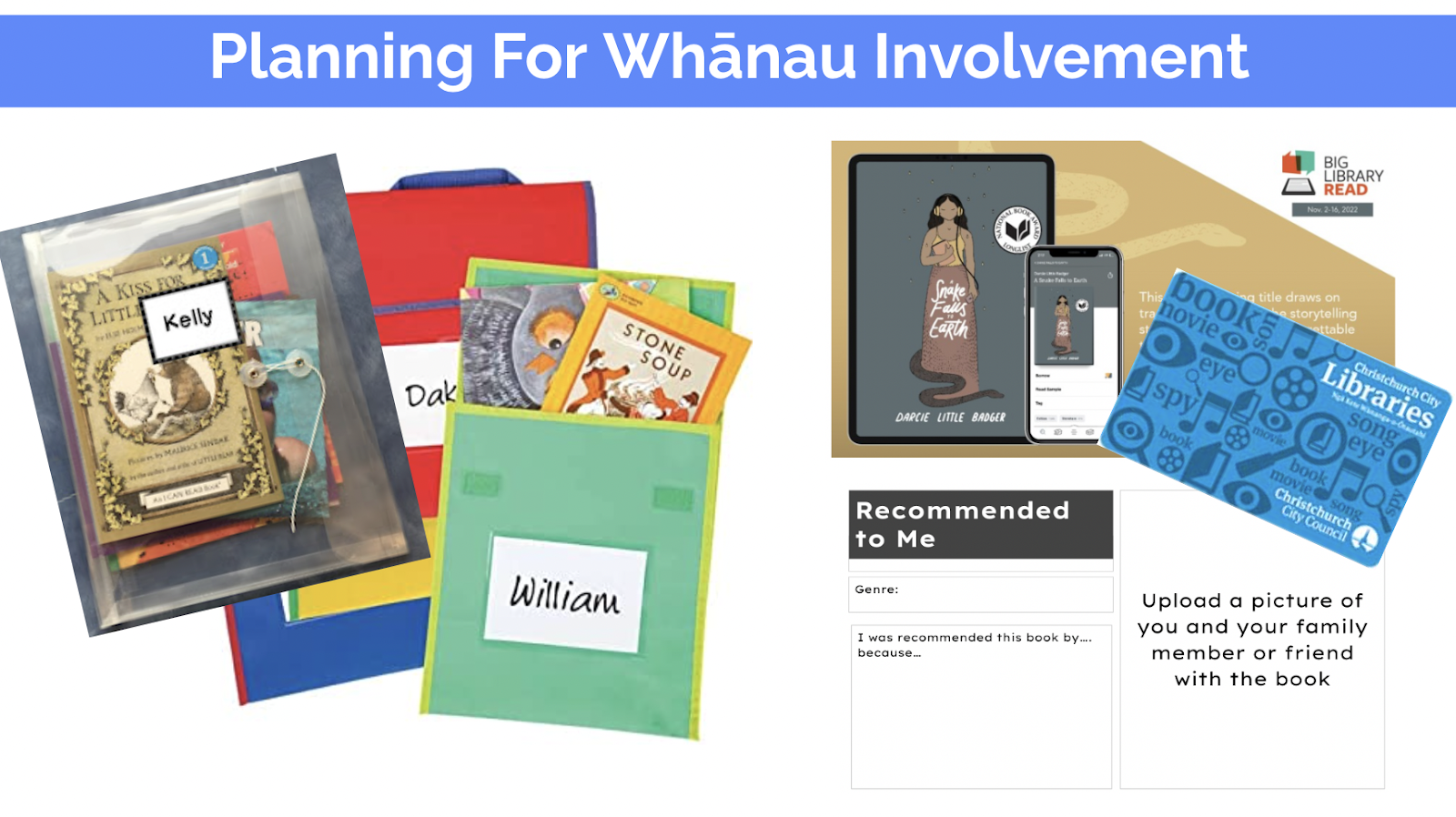
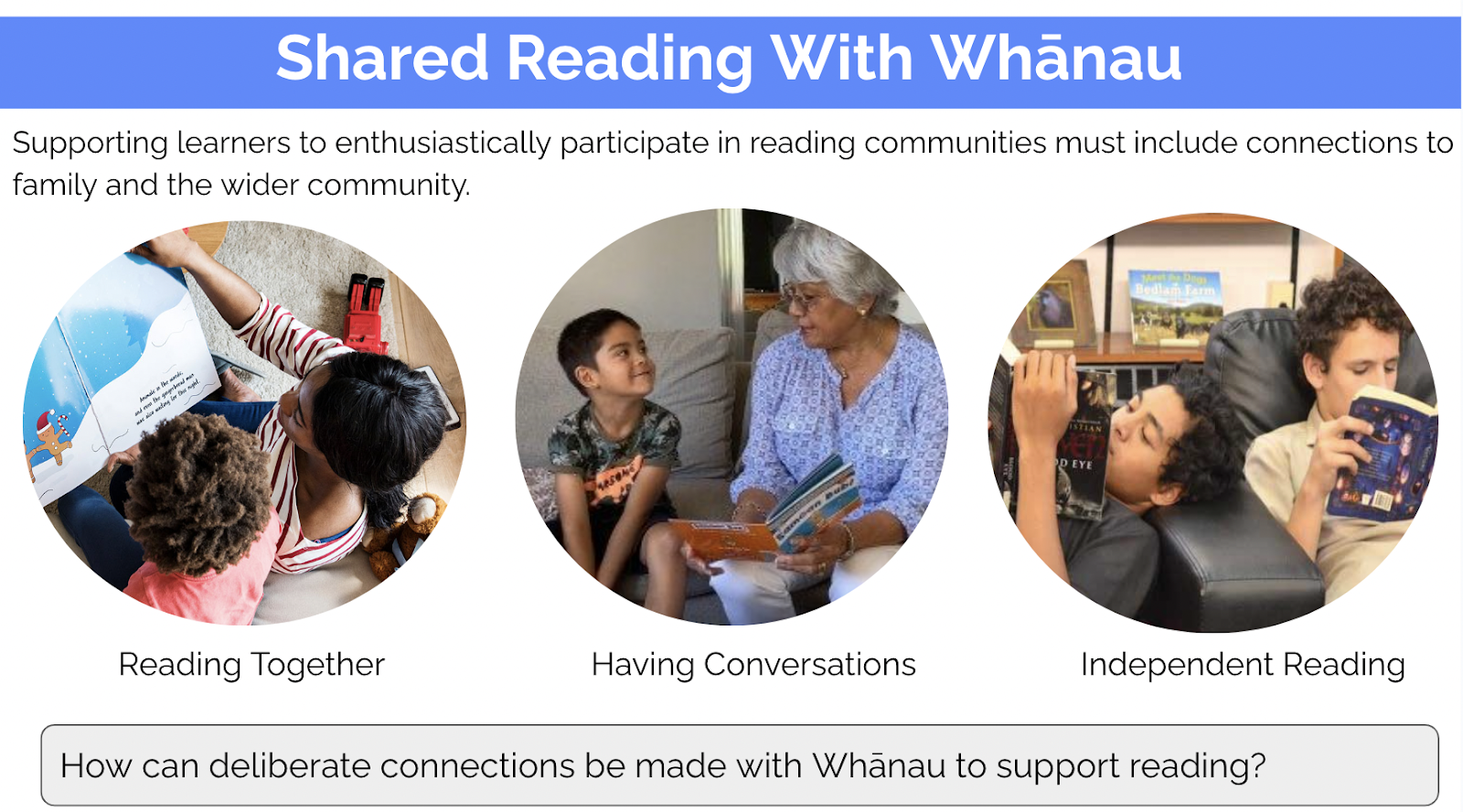
One of the final things that we talked about today was the importance of involving whanau when it comes to reading. This is something that I have been mindful of in my own class this year. The students in my literacy group are reading below their expected level, so it was important that whanau could be involved where possible.


I have tried to connect with as many parents as possible to encourage them to help their child read more at home. Even though my students are in year 6, I have a large group of students (15) who take book bags home with notebooks for parents to sign each time they read at home. I also encouraged parents to complete a google survey related to their child's reading during the last parent interviews.


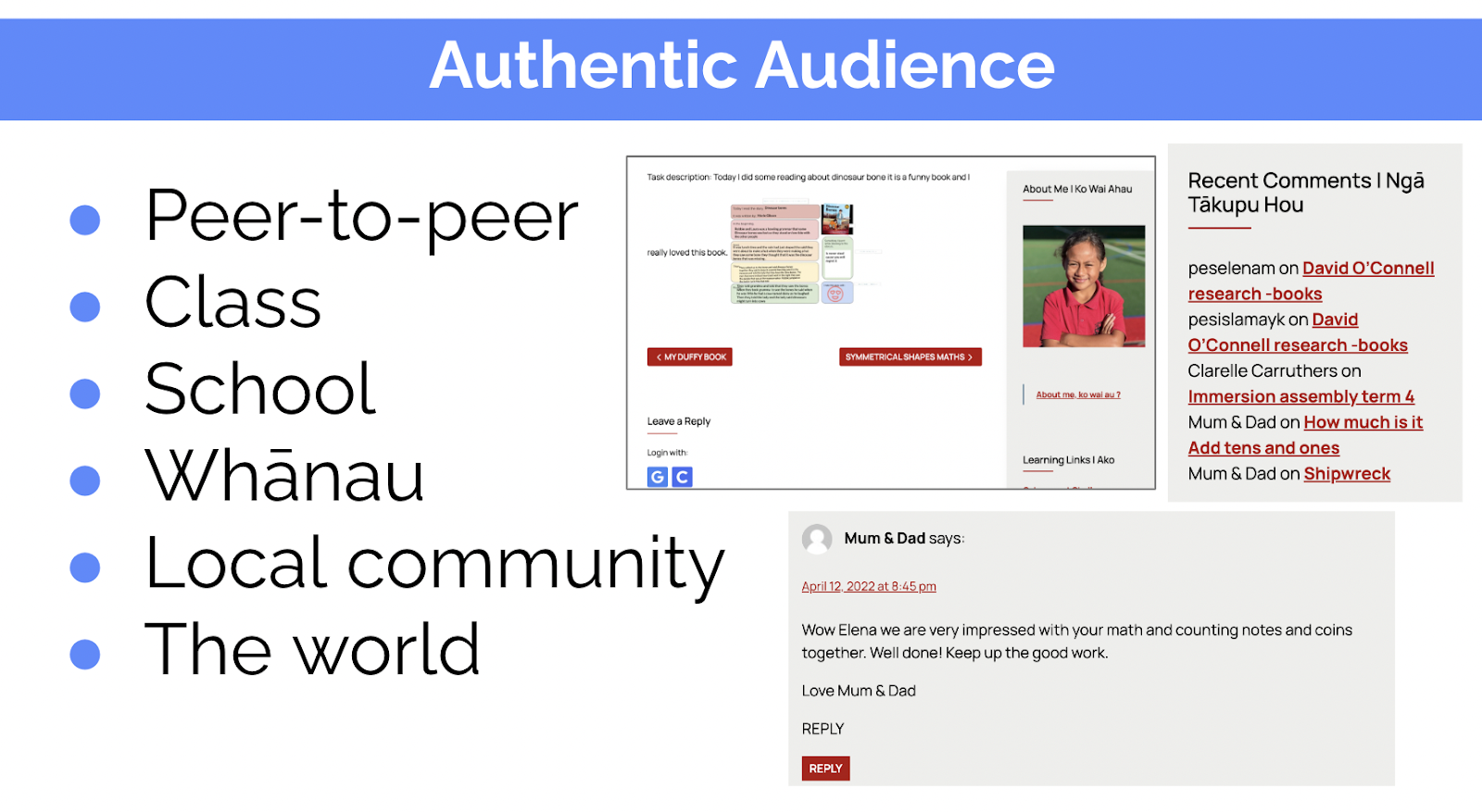
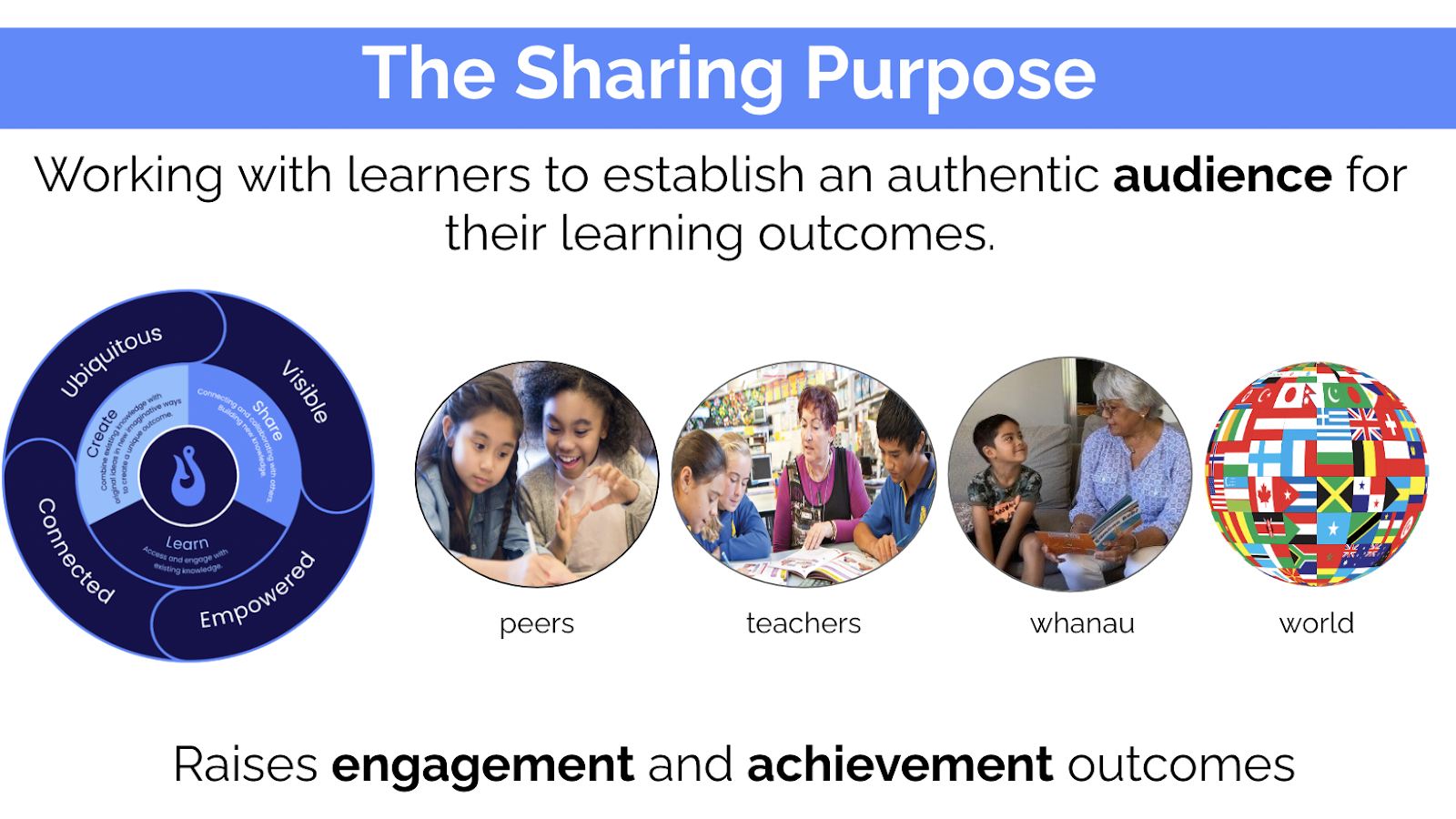
I really like the following image below as this has been my inquiry focus this term which was to improve student engagement and achievement in literacy. It is about working with learners to establish an authentic audience for their learning outcomes. This is the whole purpose of the 'Share' part of our 'Learn, Create, Share' pedagogy.

Students need to see the purpose of posting their learning on their blog. The Holiday Blogging Summer Learning facilitators ensure that students receive comments each time they post on their blog. My goal is to use the Teacher Dashboard feature where the Edublog posts are visible to help me to leave comments on work that has been recently published. Another goal is to post constructive feedback more regularly on student blogs.


Finally, upon completing the Manaiakalani RPI programme I need to consider how to implement the ideas, resources and tools that I have learnt to enhance my reading programme. The image below is a reminder that effective planning is essential to ensure that there are multiple opportunities for students to develop their vocabulary skills, critical thinking skills, student voice, reading strategies and more. This means that there needs to be careful layering across the reading model.


I am very grateful to have been selected to be part of the Manaiakalani RPI programme even though I didn't really know what I was getting into. Thank you to our facilitators, special guest speakers, mentors and colleagues. I look forward to putting many of these new ideas and resources into practice as part of my reading programme.


Tuesday, 22 August 2023

Manaiakalani RPI (Reading Practice Intensive) #8 - Creating

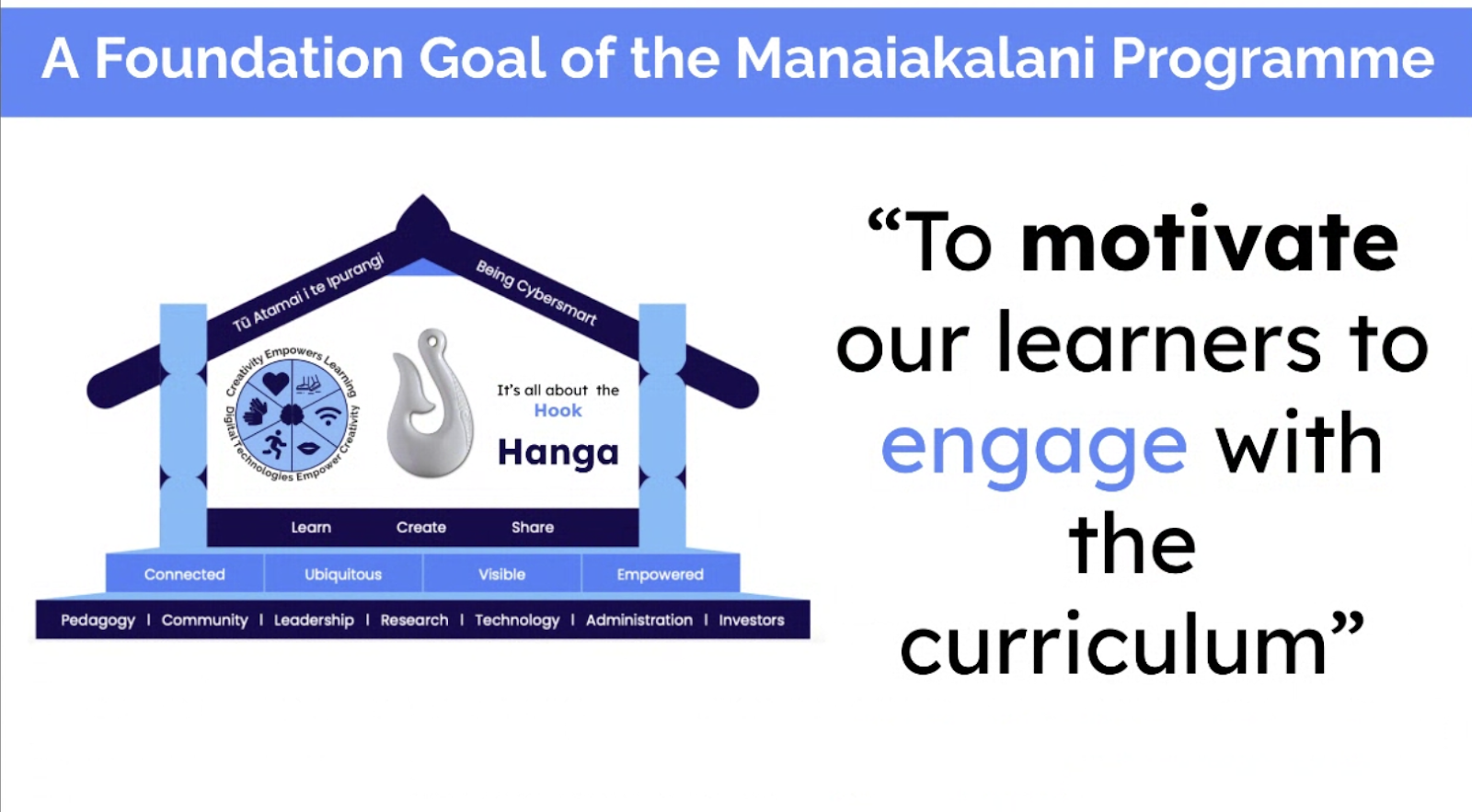
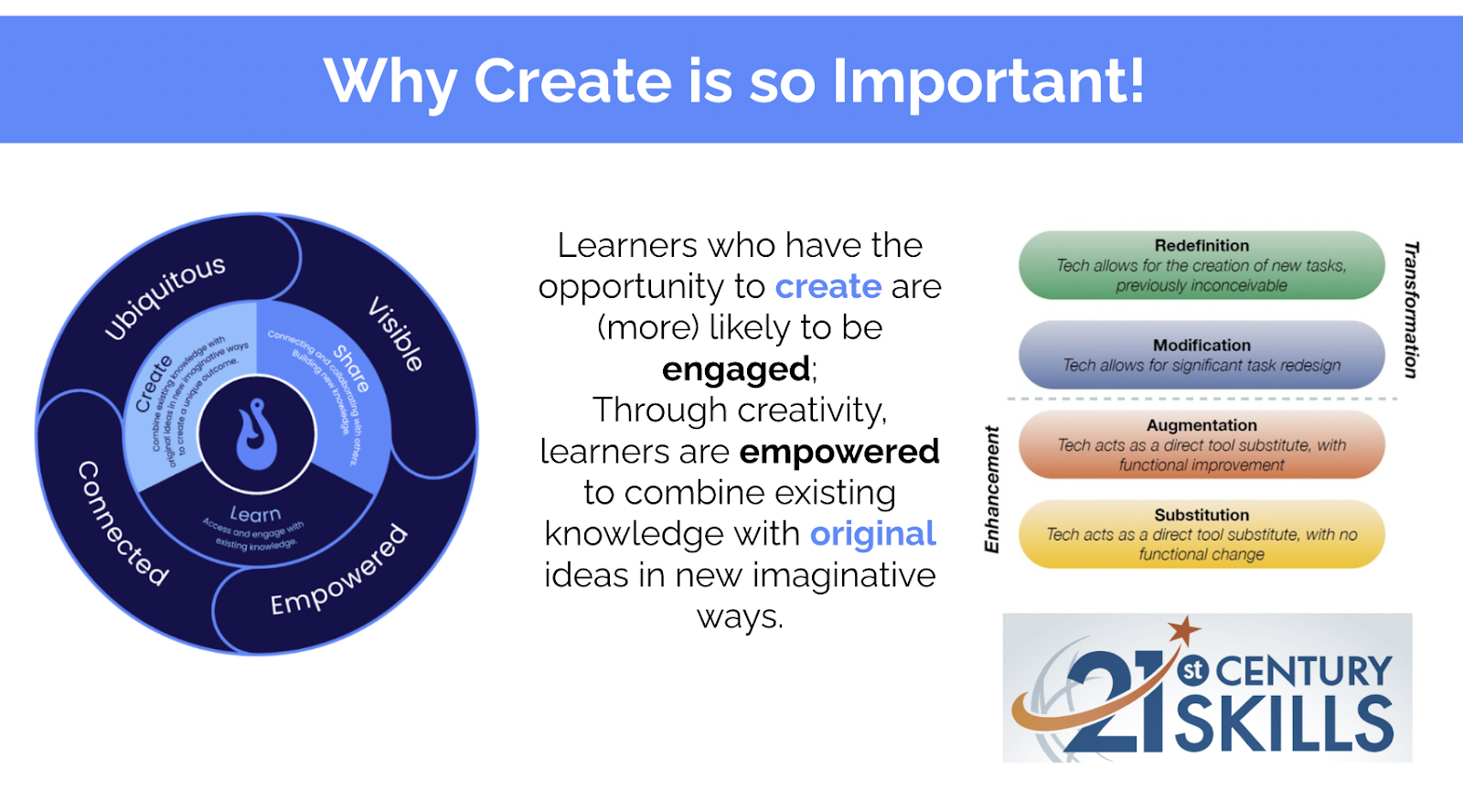
 Today, in session 8 of the RPI session, we discussed the importance of creativity in education. Dorothy Burt reminded us of the significance of the "Create" section of our Manaiakalani "Learn, Create, Share" pedagogy. She shared the consistent message from former students that creativity in their school experience has shaped who they are as people today.

Being given the opportunity to use digital technology to expand their creative opportunities goes beyond traditional arts such as weaving, art, and painting. It also builds their knowledge of other creative tasks, such as creating an amazing website. Creativity is important because of its strong links to achievement outcomes.


We were reminded that learners who have the opportunity to create are more likely to be engaged. 


Despite the importance of creativity in the classroom, there are often barriers to its implementation, such as time and resources. Today’s RPI session provided opportunities to view and use ideas and resources to enable more creativity in our literacy classes. A.I. apps and online programmes such as Canva can be utilised as part of our literacy programmes. I used an A.I. app to create a neat image based on a poem.


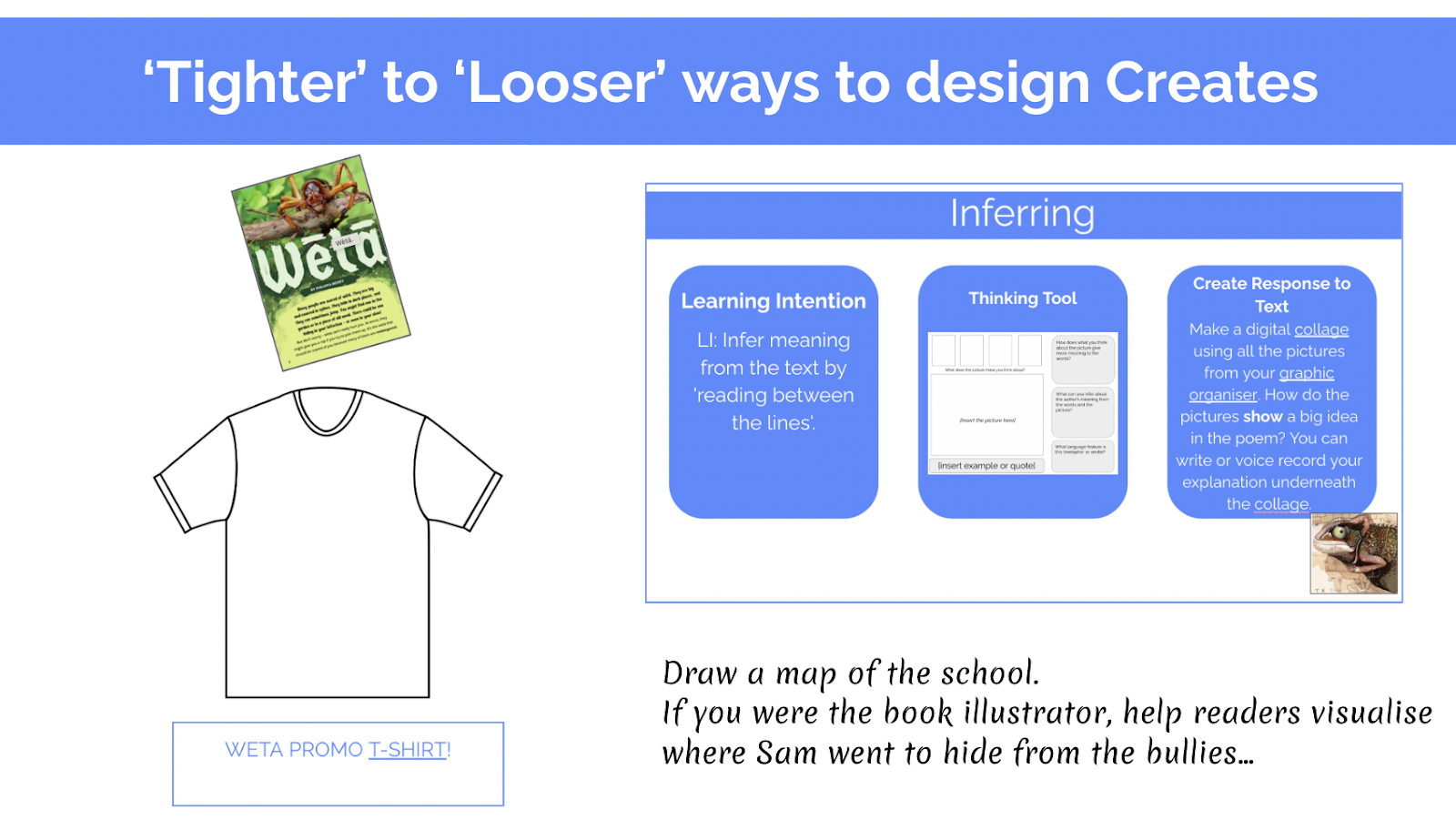
We looked at ‘tighter’ to ‘looser’ ways to design and use create tasks. This enables students to be creative within a reasonable timeframe, while allowing them some room for creativity. When I reflect back on what has been happening in my own classroom lately, I have not provided enough create opportunities for students which is disappointing. 


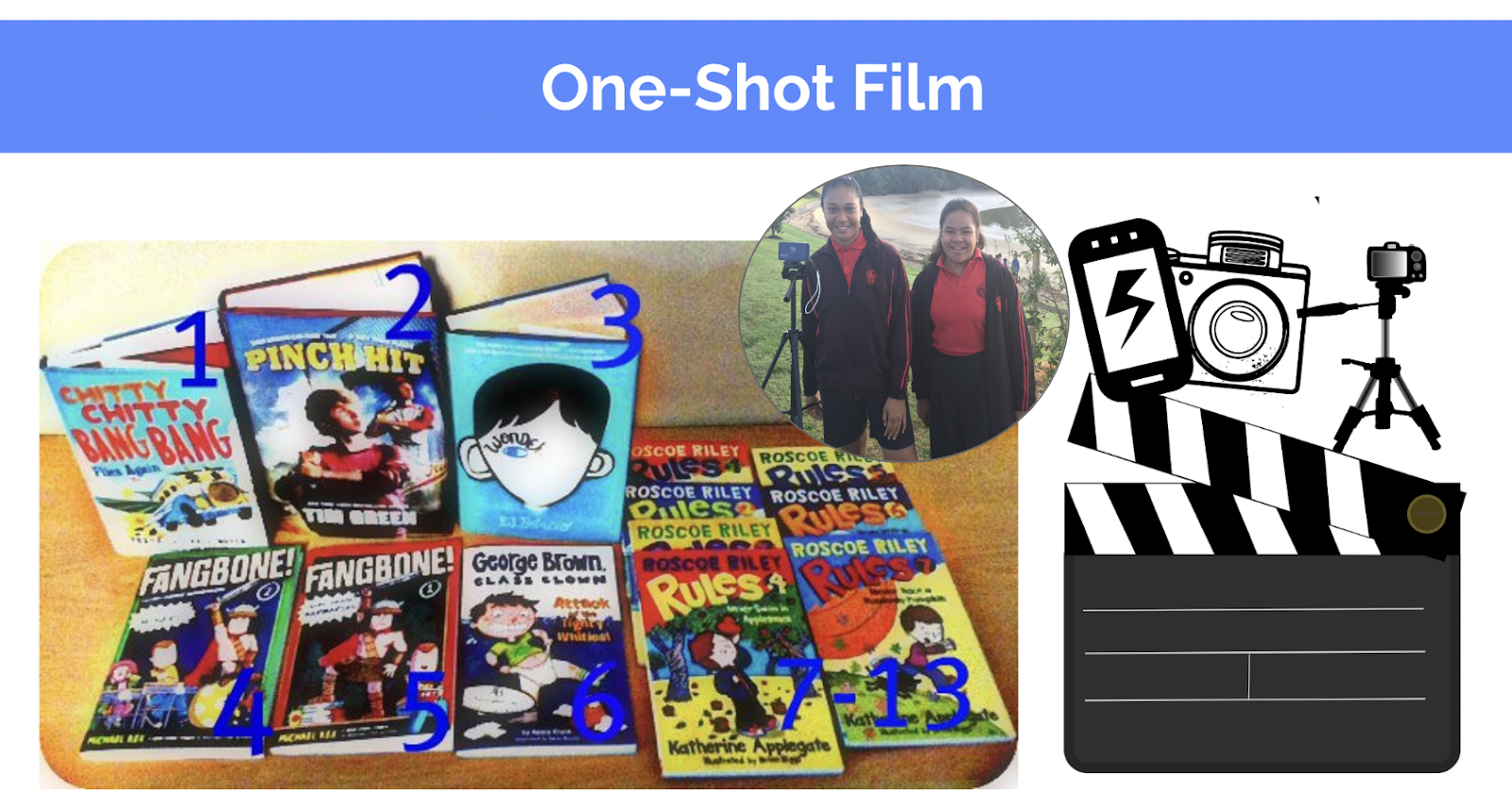
I enjoyed creating the one shot movie for a book review because it modelled how my students could do it. It also fits in nicely with our theme around the Manaiakalani Film Festival coming up next term. Fiona Grant also shared a template for Tik Tok inspired themes and backgrounds.


The range of opportunities for choice when designing ‘create’ tasks for students has re-inspired me because of today’s session which was a much needed wake up call. I am most grateful for all the cool ideas from our RPI tutors (Naomi, Georgie and Toni) and the message from Dorothy around the importance of ‘Create’ and how this can be implemented more effectively in the classroom without taking up too much teacher planning time. 


For the next couple of weeks I will be implementing some of these interesting create tasks with my students and with teachers in my team. 


Tuesday, 1 August 2023

Manaiakalani RPI Day 7 - Thinking

The main focus from our RPI session today was around critical literacy and critical thinking. We were reminded that in order to be effective in the 21st century, we need ‘to be able to exhibit a range of functional and critical thinking skills related to information, media and technology.’

Dorothy talked about the importance of teaching our students to understand what a smart digital citizen looks like and to have the skills to be able to think critically about information from online media and online texts. The Manaiakalani CyberSmart challenges are a resource that can help to address this issue.

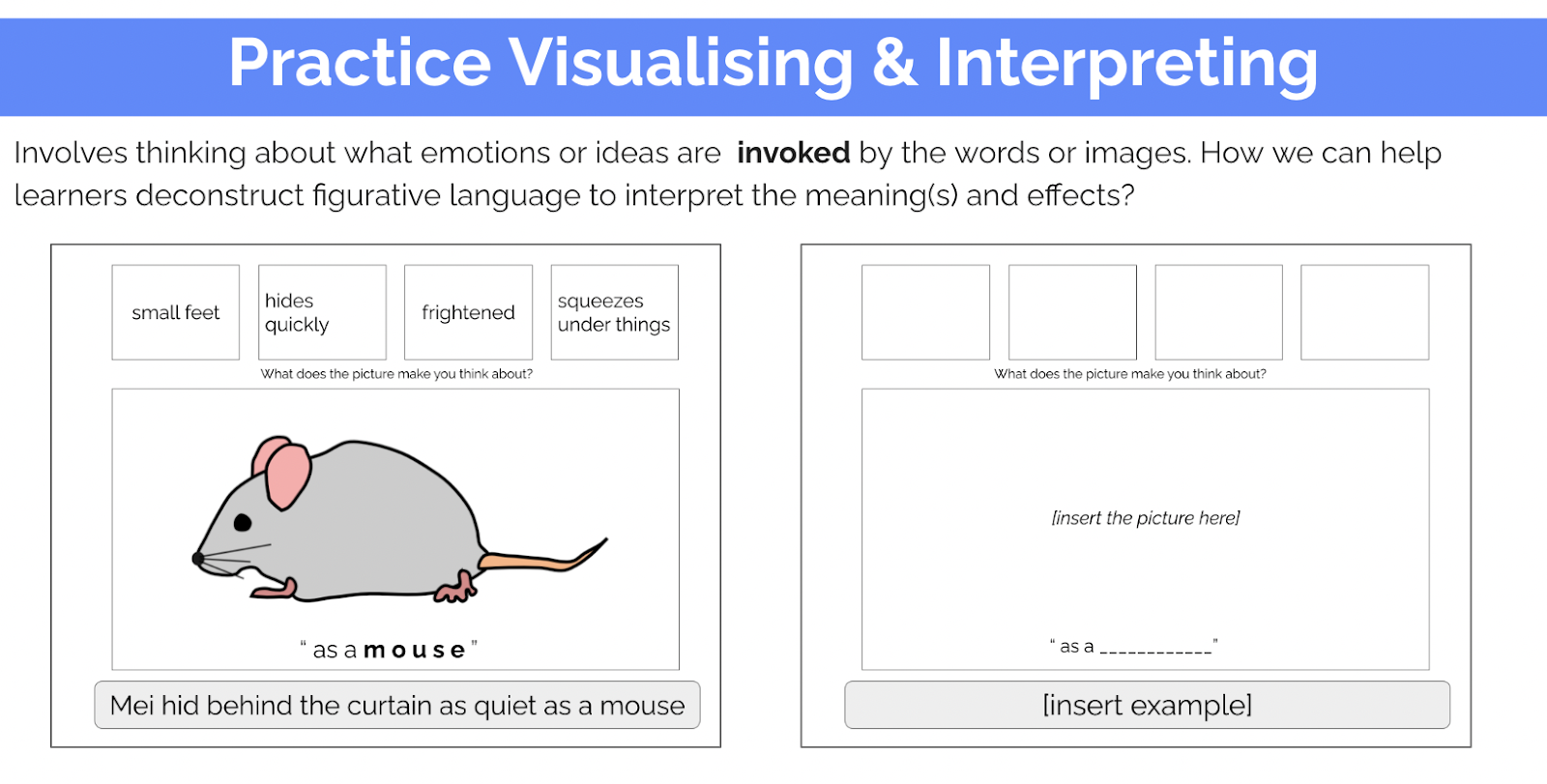
There is definitely a need for our students to develop their literal, interpretive and evaluative skills. It was a reminder to keep extending our students' knowledge and thinking skills beyond the literal level. I will be using the template shared to practice visualising and interpreting. I intend to spend the next couple of weeks focusing on deconstructing figurative language.

I think that careful planning is necessary so that the critical literacy skills that we would like our students to develop are intentionally taught as part of a reading programme. Rather than simply asking a couple of challenging questions related to the text during a guided reading lesson, students should be required to focus more closely at the text via high level follow up tasks. The digital modelling book is useful and I have begun using it with a group in my class.

We looked at another example of a task board and I paid more attention to the pre-reading activities. I had been using a task board for the past few weeks with a reading group, but my pre-reading activities had not been included yet. This is something that I will focus on in the next couple of weeks. I will also focus more on planning for extended discussions. 


Tuesday, 20 June 2023

Manaiakalani Reading Practice Intensive Day 6: Vocabulary

 Today's focus for RPI was based around teaching vocabulary. This is an area that needs to be implemented much more thoroughly as part of my literacy programme. I think that I place too much of an emphasis on the comprehension and understanding of the text for students. It would be helpful to focus on incorporating more word work or vocabulary practice with my students. A graph that was shared today reminded me of the vocabulary deficit of many of our students when they enter school. 

The following is an example of a guided reading follow up task. Even though I feel that I do incorporate some word work into the guided reading follow up activities for students, I need to provide more opportunities for children to practise saying words out loud and recording themselves so that they can hear what they are saying and listen to whether it sounds right. I also need to provide more opportunities for students to practise vocabulary activities. 


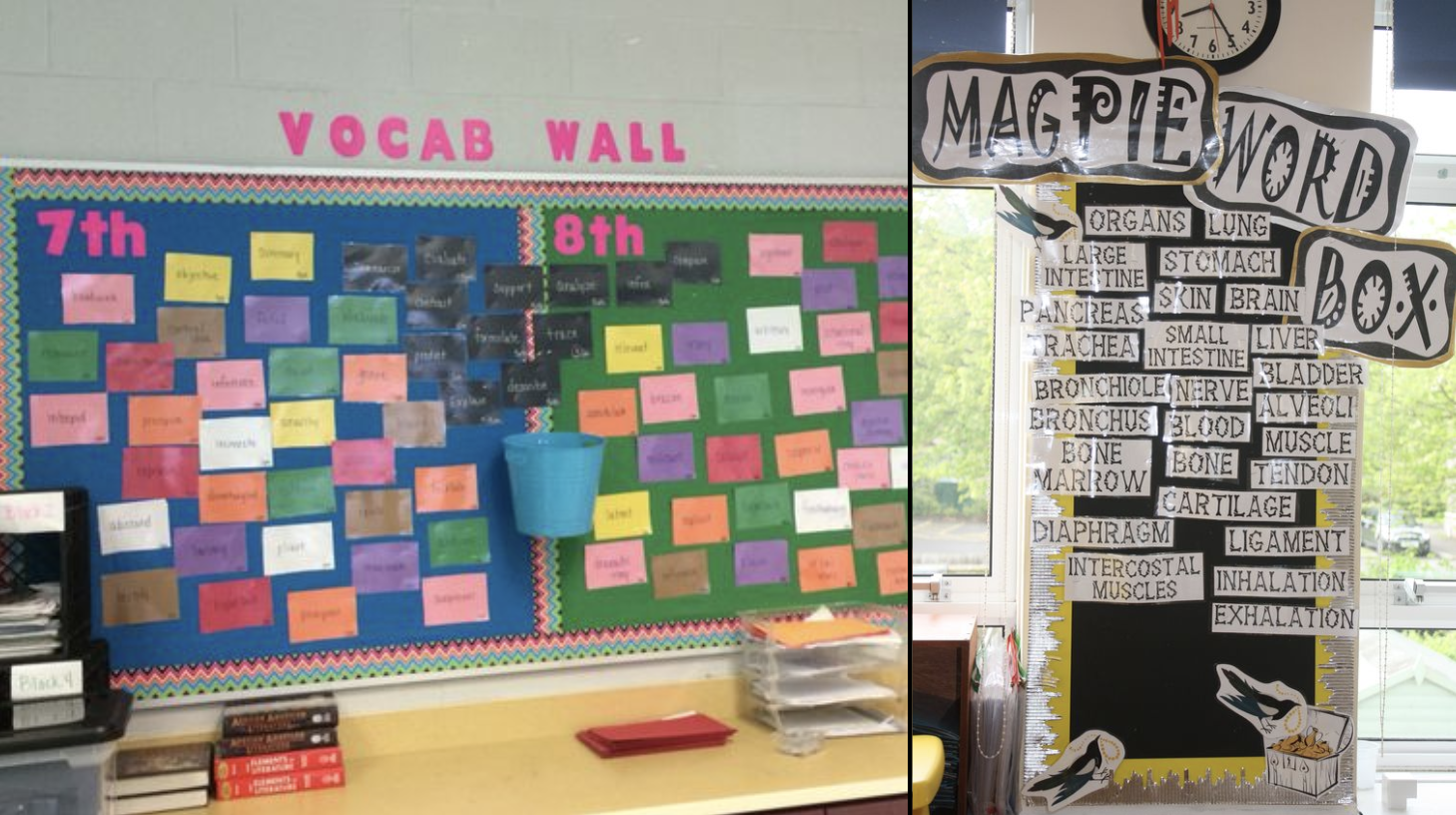
We heard about using word walls/displays in class. I do have word walls, but I am not making good use of them. I aim to do a better job of utilising my word walls next term. 


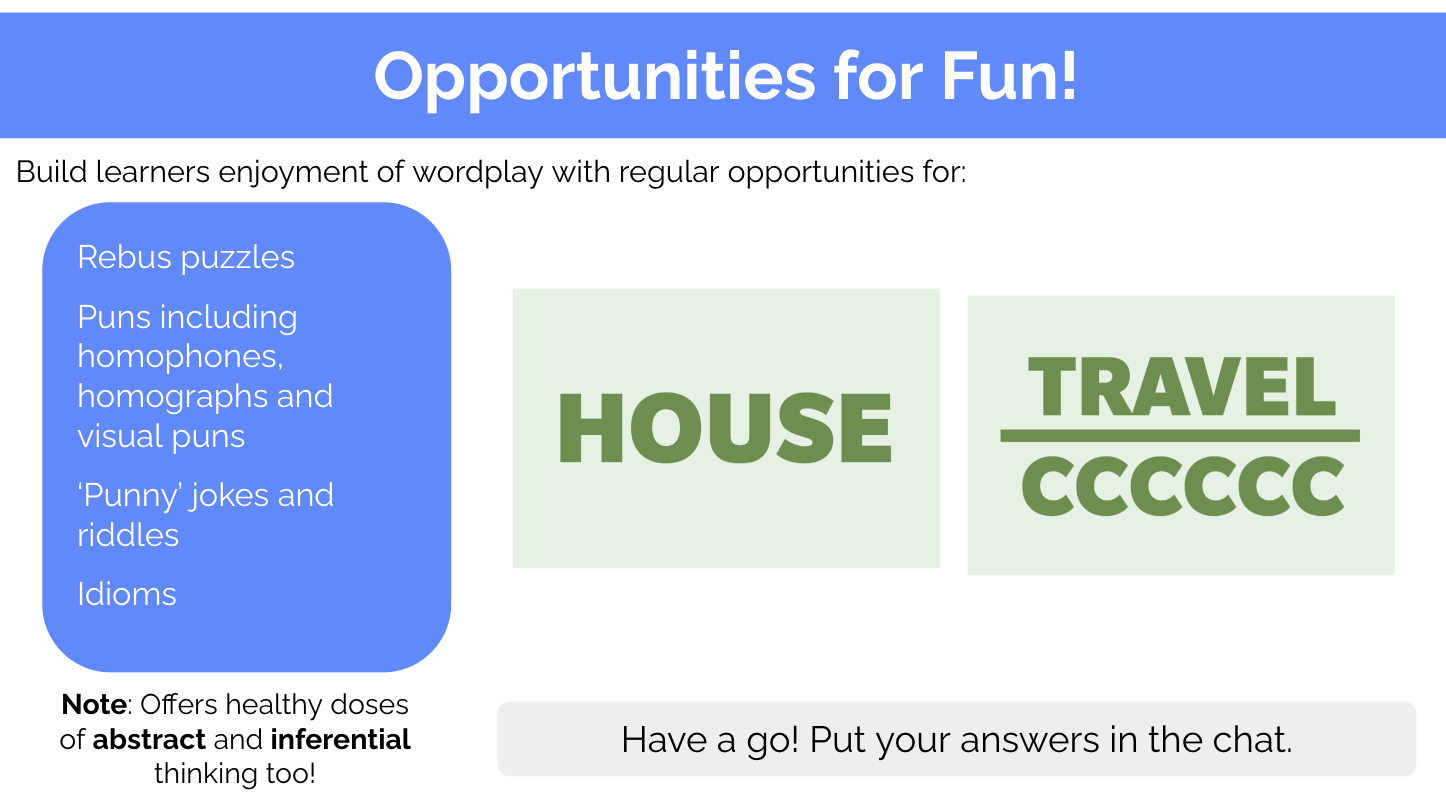
I actually really enjoyed the word play activities and will add this to my literacy planning for next term. I enjoyed the activity of pairing up with another teacher to work through some vocabulary activities. We also had the opportunity to create a follow on task based on a text for next term. I think that it’s great that we get a head start on this and start thinking about how we will implement the new learning about vocabulary with our students. 


Next term my goal is to be more explicit and intentional about teaching morphology, phonemes, spelling and growing word consciousness. Here are some of my thoughts from today as to how I plan to do this. 


Sunday, 2 April 2023

Manaiakalani Reading Practice Intensive (RPI) Day 3

 Today’s focus in RPI for Day 3 was based on Text Selection. 


What did I learn that increased my understanding of the kaupapa and pedagogy of the Manaiakalani Reading Programme ?


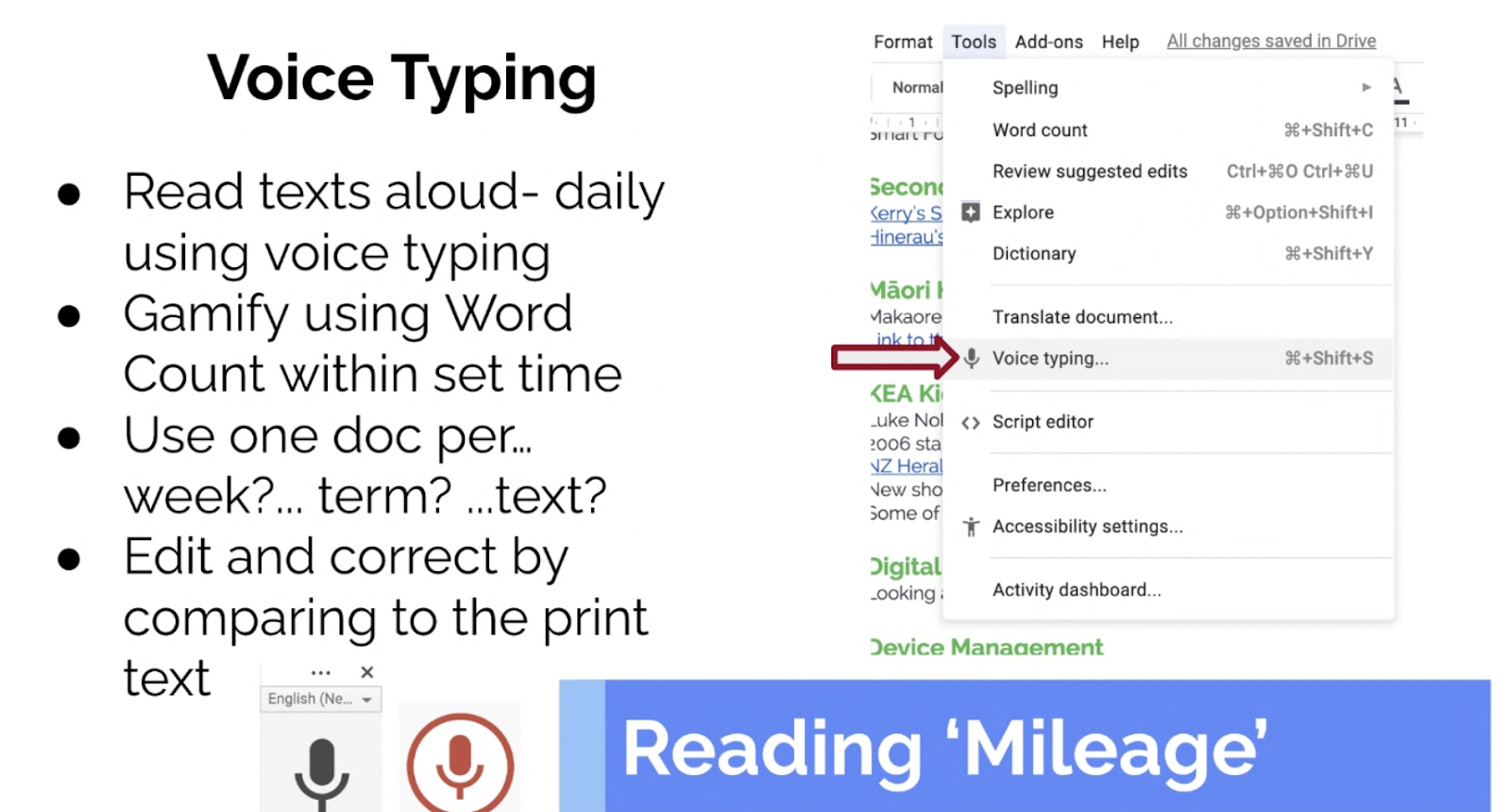
First we heard from Dorothy Burt who talked about the Manaiakalani Kaupapa and Pedagogy. She explained the importance of selecting from a wide range of both print text and digital text. Integrating the use of digital apps opens a world of learning opportunities to improve literacy skills for students. For example, using the voice typing app is a good way for readers to hear themselves talk and read aloud everyday. They can practice reading aloud to  improve their enunciation of words and their oral fluency. 


What did I learn that could improve my capability and confidence in teaching reading?


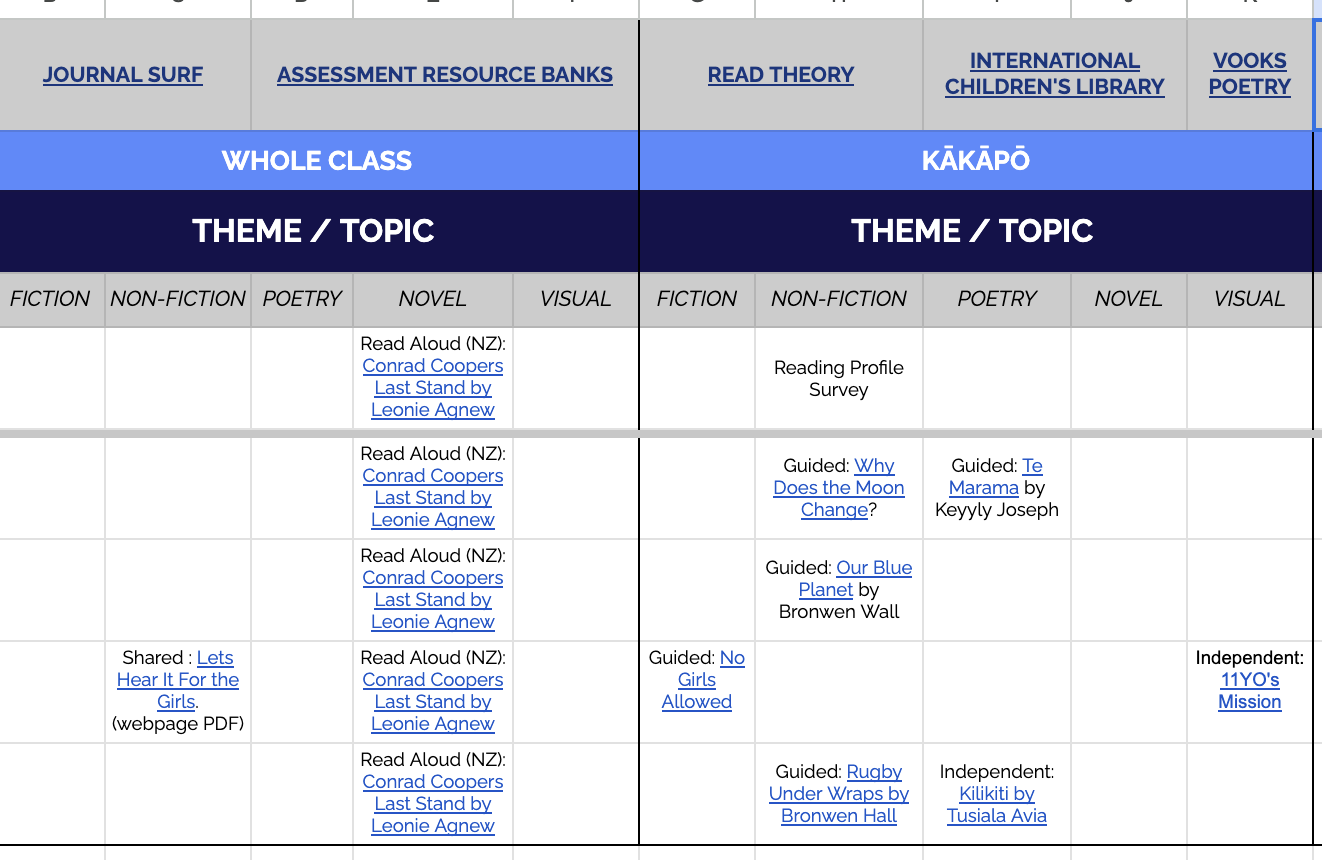
We looked a little closer at the RPI workbook to plan ahead for one of our literacy groups. The focus on ‘coverage’ of multimodal text types, differentiated reading e.g. independent, paired and shared reading etc, as well as a focus on T-shaped literacy and text sets for groups was helpful. The RPI workbook provided one example of how to plan across a term to ensure that enough coverage of different text types was happening. 


What did I learn that could be used with my learners? 


I thought that the RPI workbook was useful for planning for a rich learning programme in literacy. In a busy term, the detailed planning overview with links to resources will help when thinking about planning to meet student learning needs and ensuring that there is coverage from a wide range of different texts and text types. 


I also learnt that we need to avoid limiting our learners and allow them to extend themselves where possible. It makes sense that students should learn how to read within the zone of proximal development i.e. read texts that are not too difficult or too easy, but it also makes sense that students need to be challenged by reading more difficult texts and work with others who share the same interests. 


What did I learn that could be shared within my wider community, with either colleagues, or whānau/aiga?  


I think that the emphasis on multiple opportunities to read and the digital resources available to suit all learners was fantastic. Children’s interests need to be taken into account and cannot always be teacher directed which happens more than it should. The digital resources need to be shared with whānau/aiga. I think that some of the tips from the workshop should be simplified (summarised) and shared with parents on our class site.


Tuesday, 7 March 2023

Manaiakalani Reading Practice Intensive - Day 2

 In today's workshop the focus was around knowing your learners as readers. 


  • What did I learn that increased my understanding of the kaupapa and pedagogy of the Manaiakalani Reading Programme ?


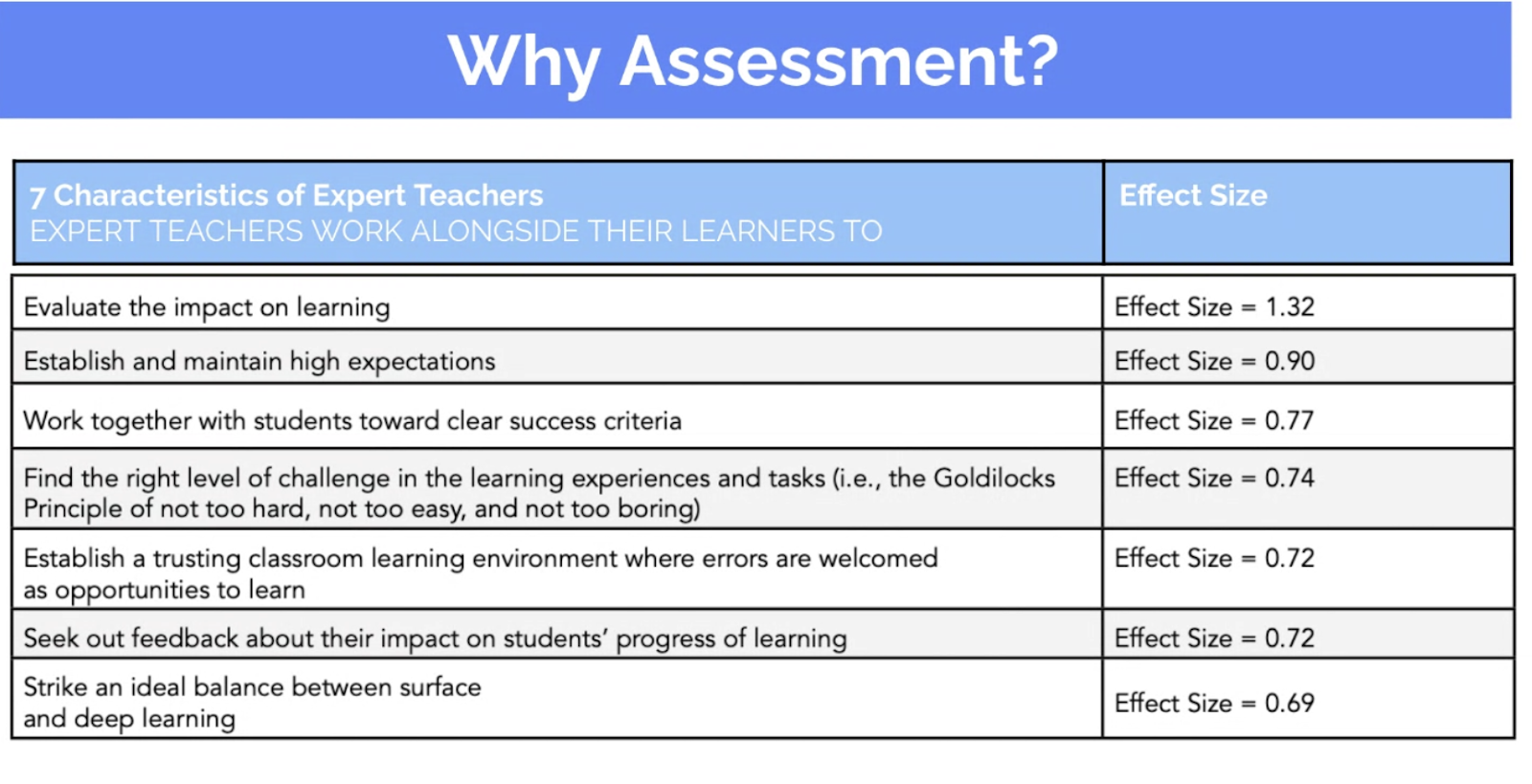
I learnt that taking into consideration the interests of the students is really important when designing a reading programme, even for the students who are struggling. The reading survey is a great way to capture the interests and attitudes towards reading of the students. A careful analysis of the PAT Reading data to identify common areas where there are gaps in learning  is good practice. Another interesting thing that I learnt was the importance of assessment and the impact of effect sizes on student learning e.g. the larger the effect size, the greater the impact in a positive way it was for students overall.


  • What did I learn that could improve my capability and confidence in teaching reading?


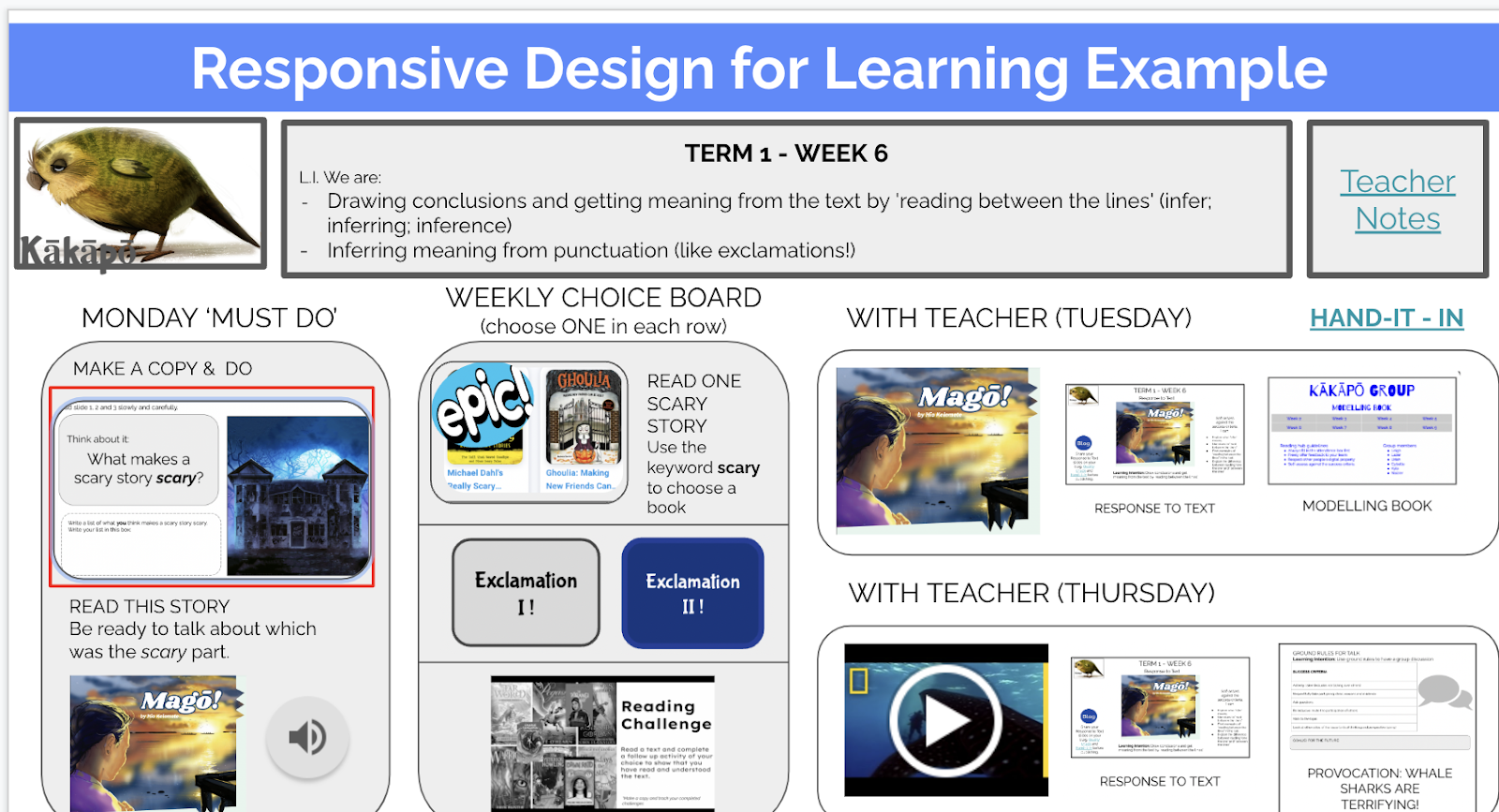
To keep looking at new ways of designing the reading programme for students so that tasks are aimed more specifically at addressing student needs in a way that is engaging and interesting. The reading task board was a good example of a resource or template that could be used.


  • What did I learn that could be used with my learners? 


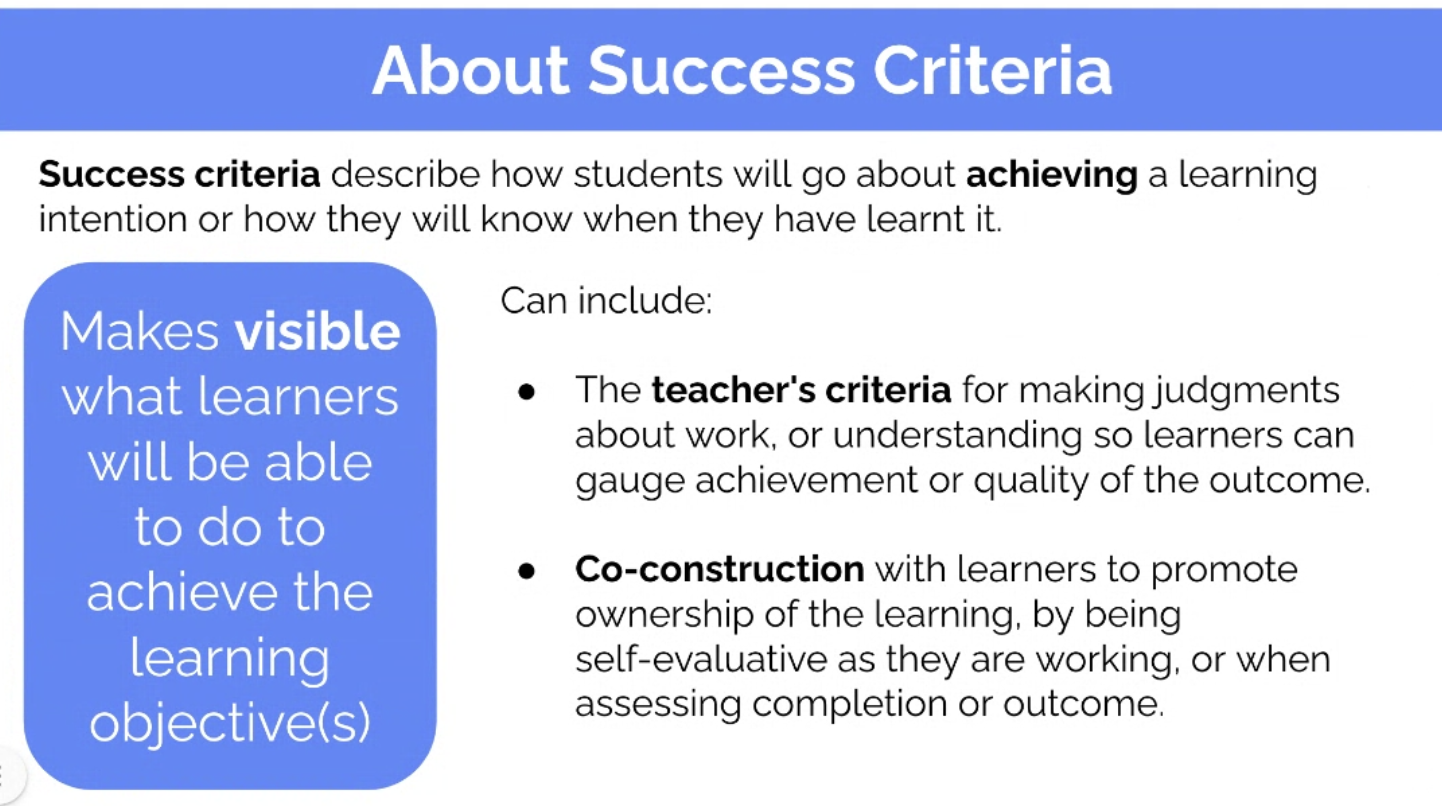
That success criteria can be co-constructed, even with the low ability readers, but to also keep in mind that it needs to be teacher directed to stay on track. 


  • What did I learn that could be shared within my wider community, with either colleagues, or whānau/aiga? 


Share with colleagues: ideas for designing reading e.g. the taskboard. Using the reading survey and how to analyse PAT data more effectively when creating the next steps for learners. 


Tuesday, 14 February 2023

Manaiakalani Reading Practice Intensive - Day 1

Focus for the day: Reading is Core to Learning

Reflections:

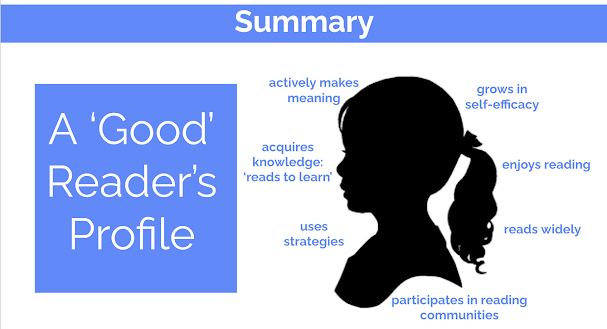
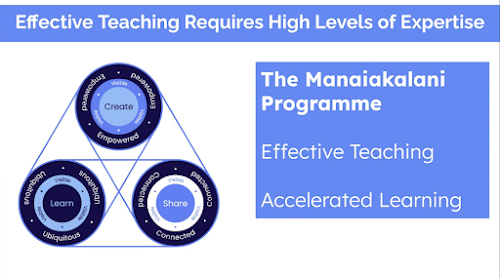
There were some good reminders of the kaupapa and pedagogy of the Manaiakalani reading programme. We looked at what makes a good reader. We were also reminded that effective teaching is important for accelerated learning. We need to know who our learners are and what their needs are. A class survey to find out informal information e.g. student interests is important as we tend to focus on what the data tells us e.g. reading age and PAT scores.


Reading Pillars of Practice: This exercise was useful. I identified areas where I needed to focus more on e.g. I need to spend more time planning for Vocabulary as well as Comprehension. I need to look at how I can engage whanau more, especially with the lower literacy group.


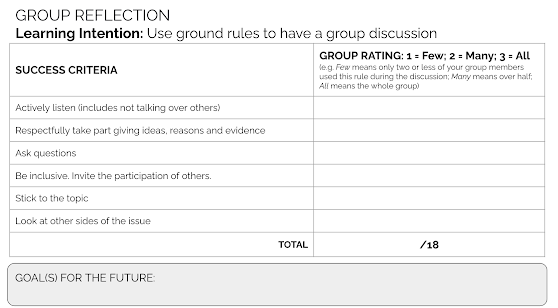
To be used with my learners: the class reading survey to check informal information about my students interests and attitudes towards reading etc. Establishing the ground rules for group talk was interesting. Something that I might do a little differently is to provide a little more student choice during reading sessions e.g. task selection.


What I intend to share with others: Whanau - encourage whanau to make reading a focus at home e.g. share learning goals. Colleagues - share information gained from reading practice intensive.

Tuesday, 11 August 2020

Manaiakalani Create Staff Meeting 2020

Yesterday teachers and staff from the Manaiakalani Cluster of schools attended workshops at Tamaki College. The focus was on the 'Create' part of our Learn, Create, Share pedagogy. 

Naomi Rosedale (from Woolf Fisher Research) opened the meeting with an interesting presentation around student design for learning. Apparently slide presentations are used far too often as DLOs (Digital Learning Objects) but there are opportunities to amplify learning through the use of this medium if used effectively. Screencasts could be used more widely in subject areas other than maths. MAPIC was also an interesting concept that was introduced: Multi-modal mapping of ideas, Amplification, Personalisation, Interaction and Coherence. 

Teachers were then able to attend two workshops based around the idea of create to learn. Andrea Tele'a and I presented one workshop based around PENN (our Pt England News Network). PENN is an in-house news programme produced by staff and students and has been broadcast throughout the school four days per week since 1988. It is an opportunity to develop presenting, scripting, movie making and movie production skills. 

The following movie showcases some of our talented teachers who attended our workshop. They did not have time to practice and were literally in front of the camera on arrival to the workshop. Thank you teachers!


I then attended an amazing workshop about how to use MineCraft on an ipad. Thanks to the teachers from Stonefields who led the workshop. 

Friday, 25 May 2018

DFI - Final session and Google exam

Today was the final session of our Google Digital Fluency Intensive workshop. We had 3 hours to sit the exam online and received our results a few minutes later. It was quite a nerve wracking experience and in hindsight I should have spent less time on the multi-choice questions and more time on the scenarios.

Overall I have enjoyed participating in the DFI workshop. I feel like I have improved my overall digital fluency which was the goal from the start.